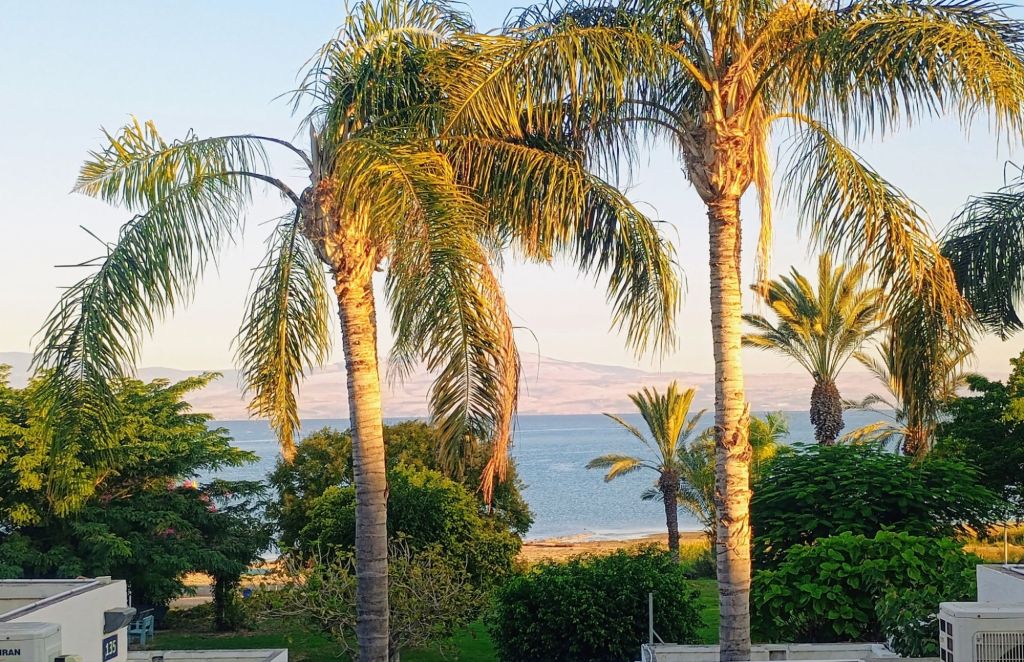
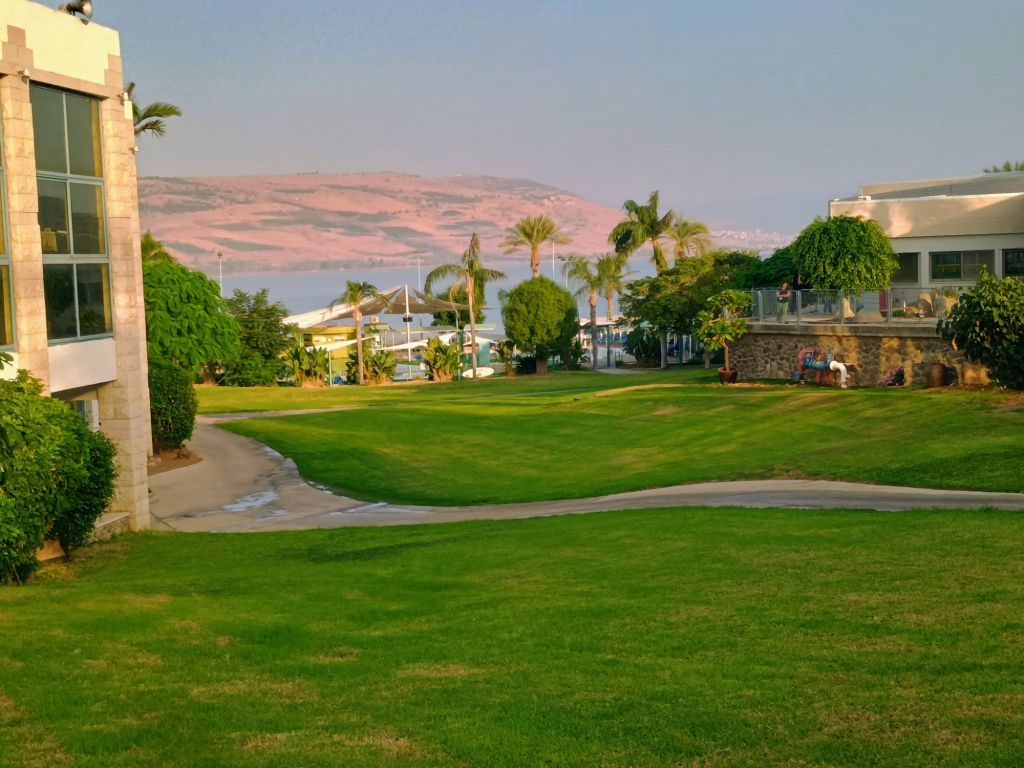
One can never spend too many days in the Galilee! With mornings awash with bright rays of sunshine and the beautiful sound of chirping birds to open the day, it’s hard to imagine a better place to be! The sites, the sounds, the thrill of walking in Jesus’ footsteps is beyond amazing. Yet, in order to experience new things, we must move on. We’ll miss the Sea of Galilee, but we also anxiously await the treasures to be found on today’s journey! The sites we see over the next two days are new to almost everyone, so this should be a treat!
We had a chance encounter with Joshua Aaron this morning. His tour group arrived at our hotel last night, and he happened to be on the property this morning. I’ve been blessed to meet him on several occasions, so we said our quick hellos before our group loaded up on the bus. (For those who may not know, Joshua Aaron is a recording artist and one of Israel’s most magnificent worship leaders. If you are into Messianic worship in Hebrew and English, Joshua has plenty of music available. Look him up on YouTube!)
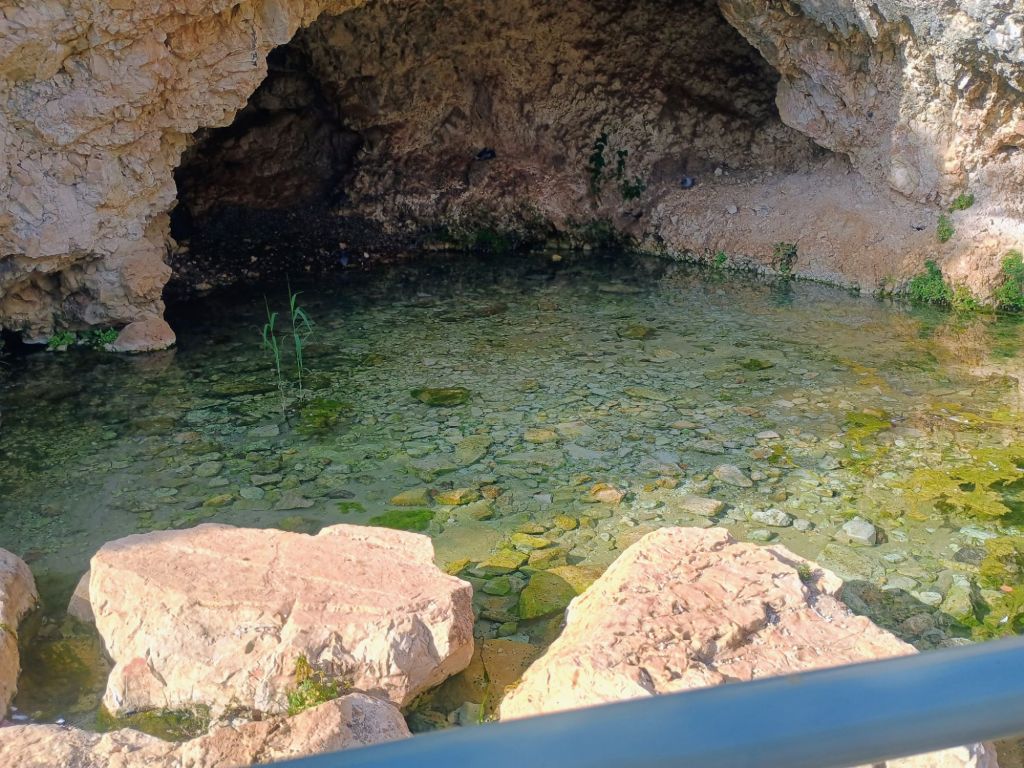
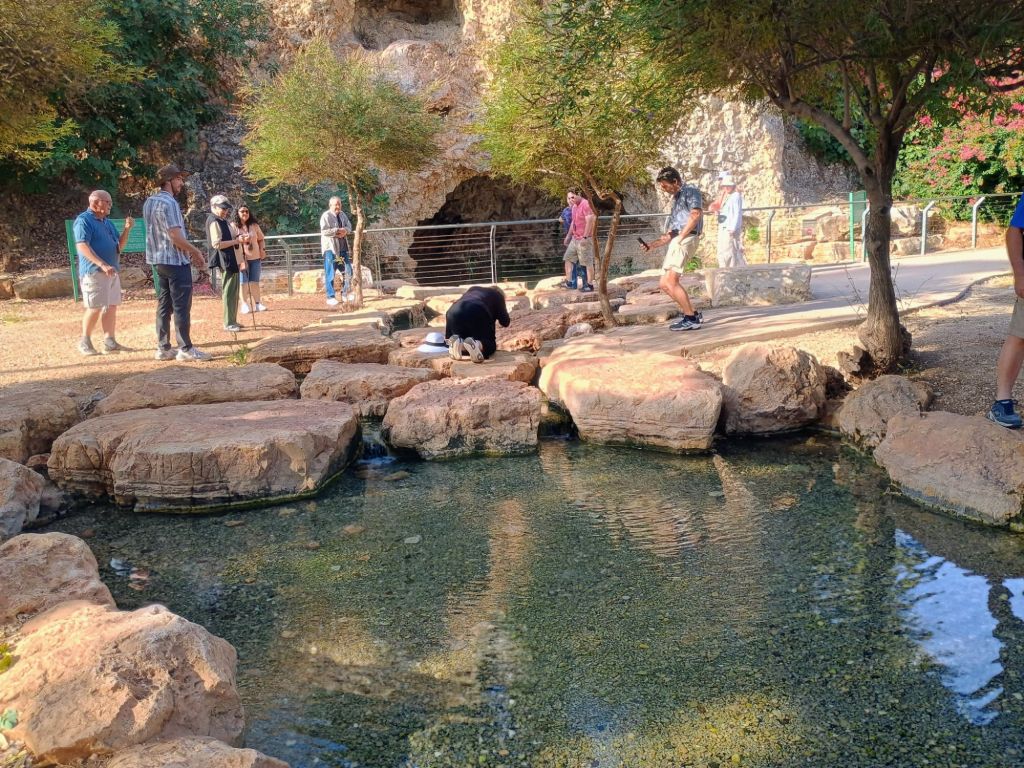
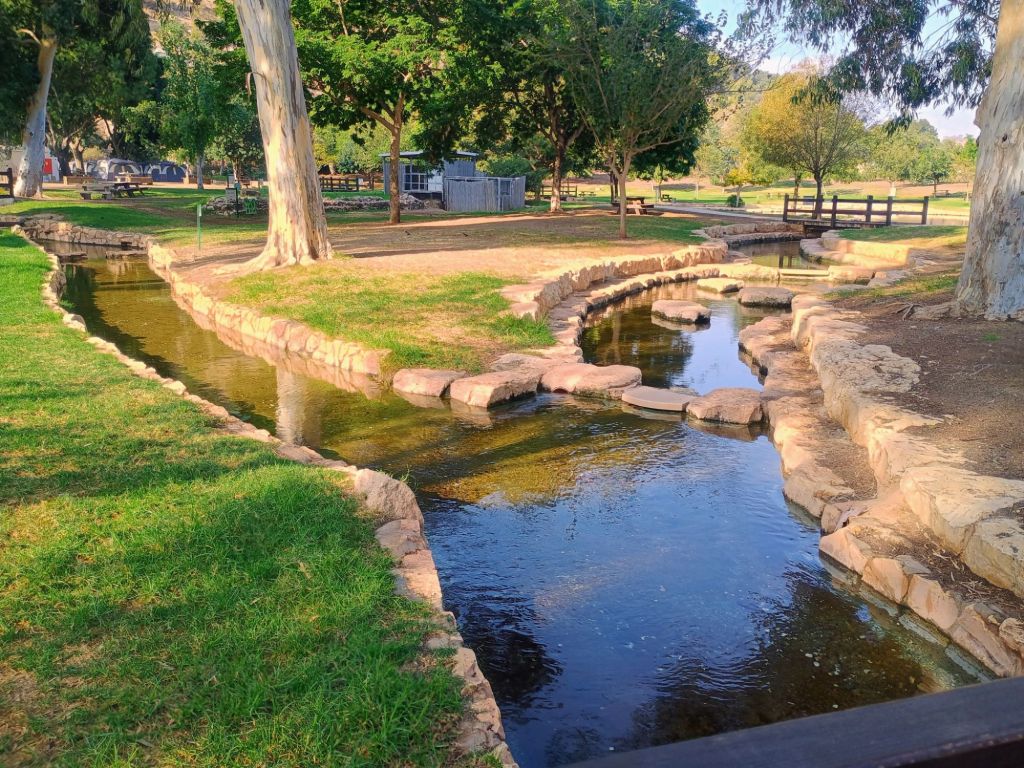
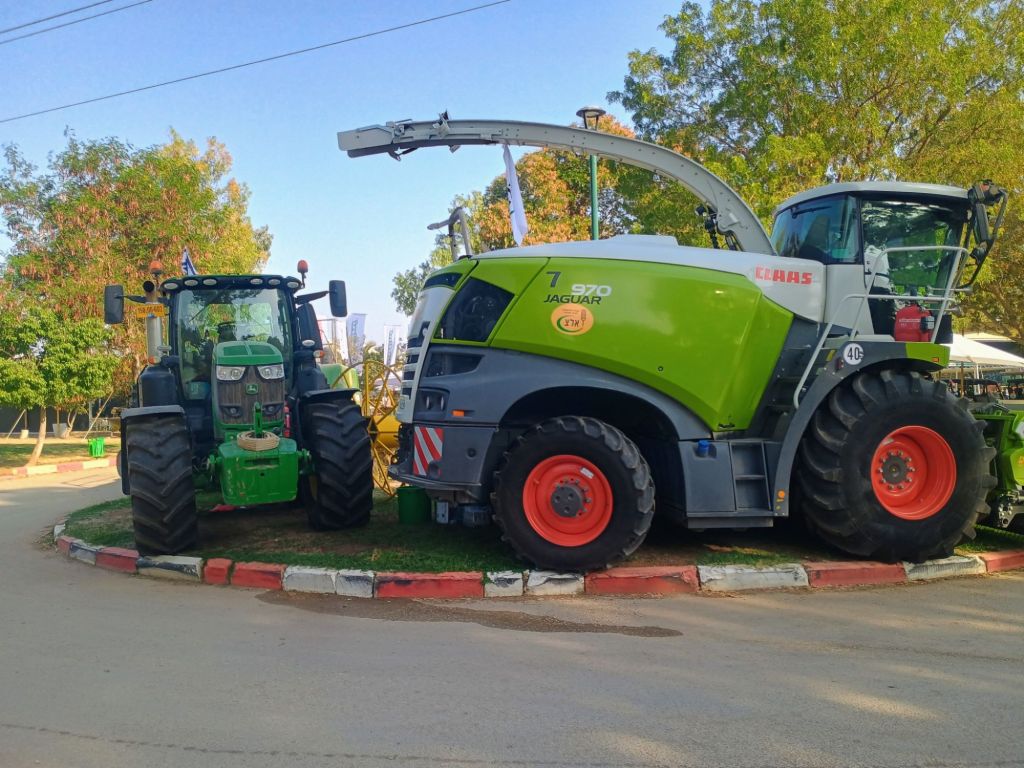
Boarded and rolling at 8:15am, we headed toward Gideon’s Spring (aka the Spring of Harod). It is a nice city park-type area where families come for weekend and holiday activities. Today was bustling with exhibits of farm equipment and tools! But we made our way to the back of the park where the spring is located and it was beautiful.
From a Biblical perspective, this is believed to be where God whittled down Gideon’s band of warriors from 32,000 to 300 (Judges 7). Having promised Gideon a victory over the Midianites, God prepared a very creative way in which to accomplish His purposes. Trimming an army going into battle is not normally considered wise strategy, yet God would make it impossible to win a battle short of His work on their behalf. I love the Lord’s words to Gideon in verse 9 of that chapter: “Arise, go down against the camp, for I have delivered it into your hand.” A reminder to us all that God will deliver our victories if we will simply trust and obey as Gideon did.
Yotam (our guide) shared a nugget I had never heard! Interestingly, “Moreh” (the mount upon which the Midianites camped) and “Harod” (the spring at which Gideon’s men were camped) share the same Hebrew root: fear. Perhaps there was fear in both camps, but according to Judges 7:3, God told Gideon that whoever is fearful and afraid should depart. As a result 22,000 of Gideon’s men left. Yet it wasn’t simply fear that caused God to trim Gideon’s army! It was also to remove all doubt that God would do the miraculous! Read Judges 7 to find out how the story ends!
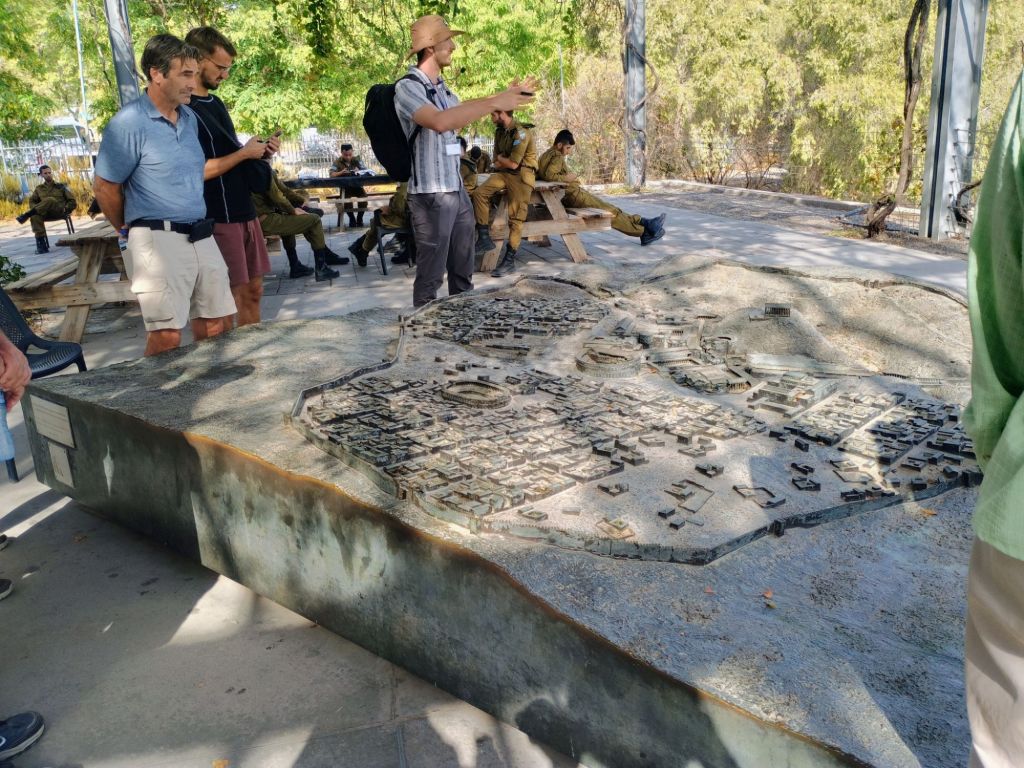
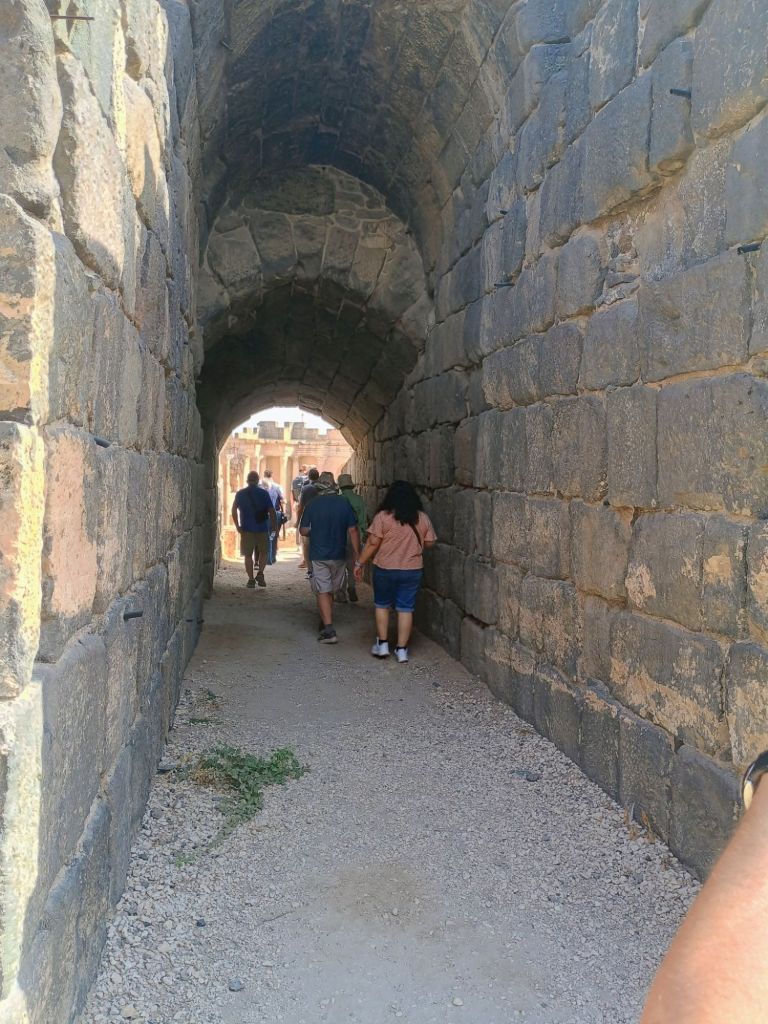
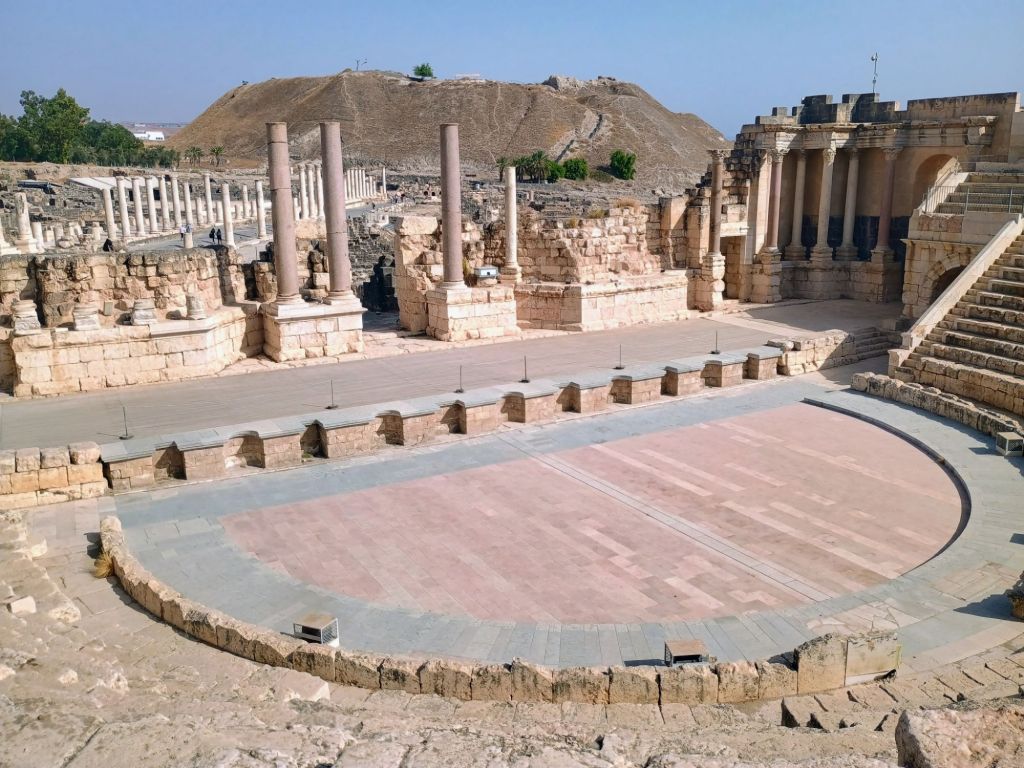
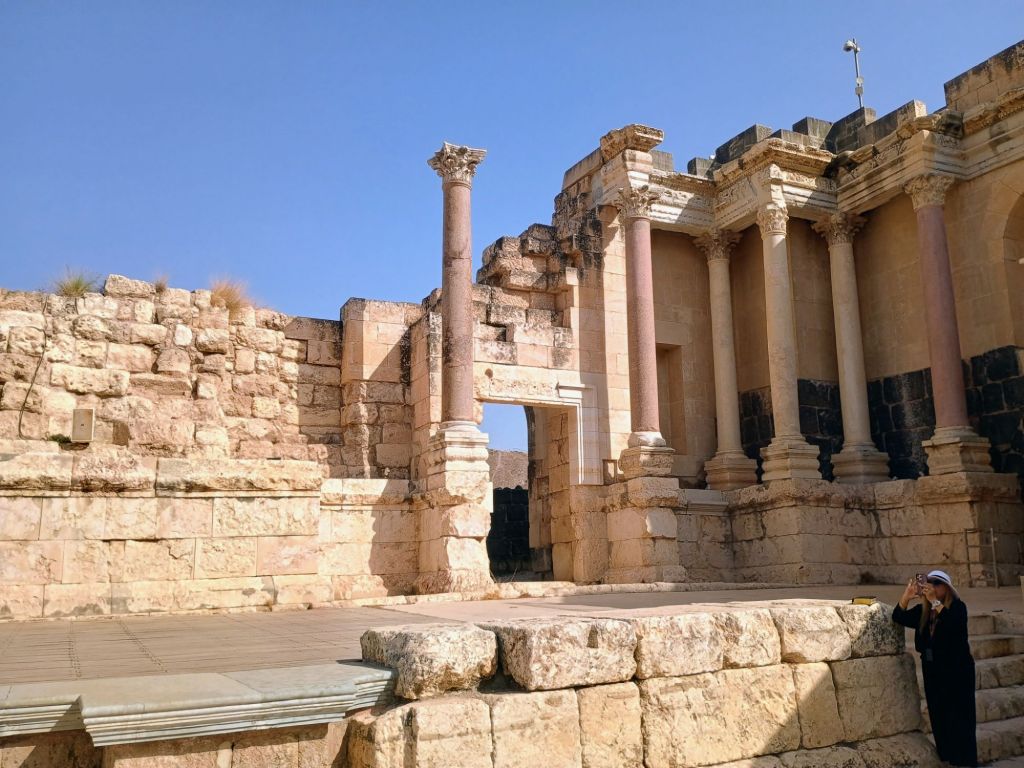
Heading east from Gideon’s Spring, we made a short trip to Bet She’an, a decapolis city filled with Greco-Roman influence. The reconstruction of Bet She’an is one of the largest archaeological projects undertaken in Israel. Though a key city in Jesus’ day, there is little Biblical significance other than the dead bodies of King Saul and his sons hung on city walls of Bet She’an after losing a battle to the Philistines at Mt Gilboa. Otherwise, it is known as a very well reconstructed pagan city, complete with a theater, a hippodrome (for horse races), bathhouses, gymnasiums and very public restrooms which served as places of gossip! For observant Jews, Greco-Roman cities were unclean, so Jews did not go there.
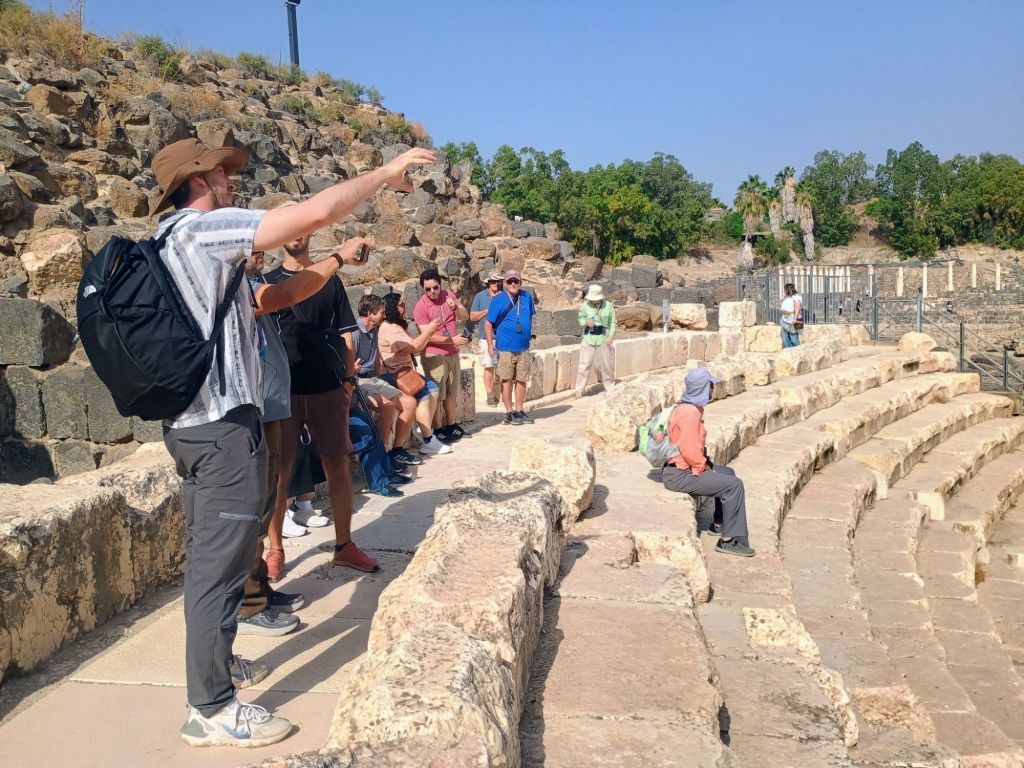
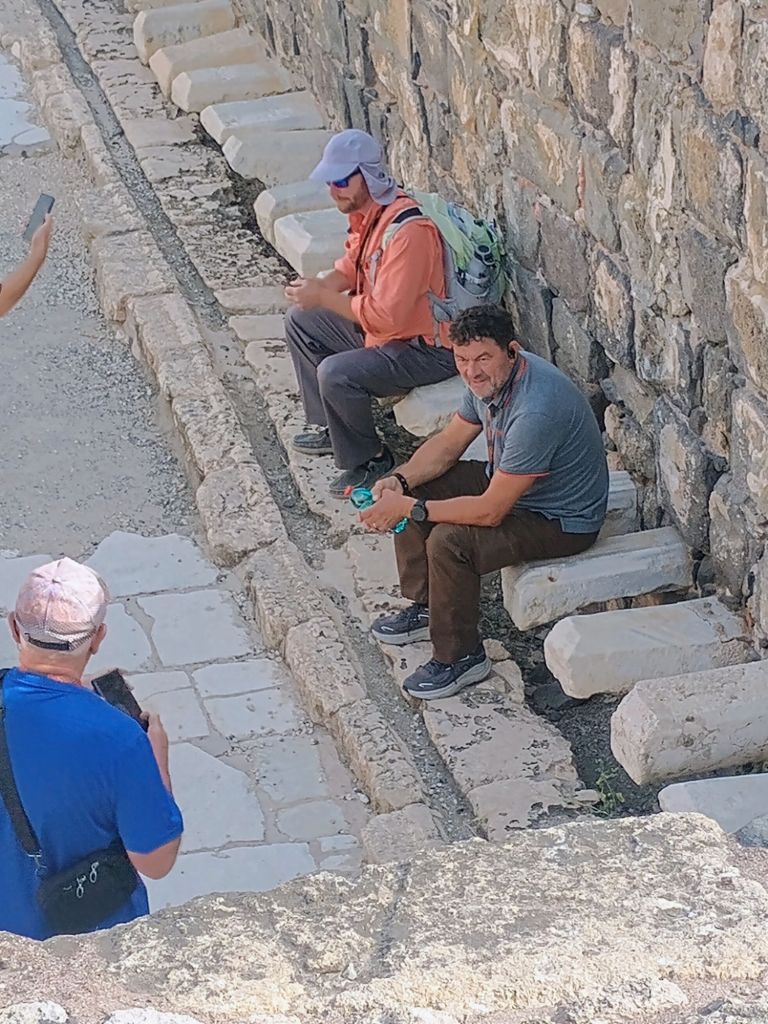
Hint: one cheek on each bench
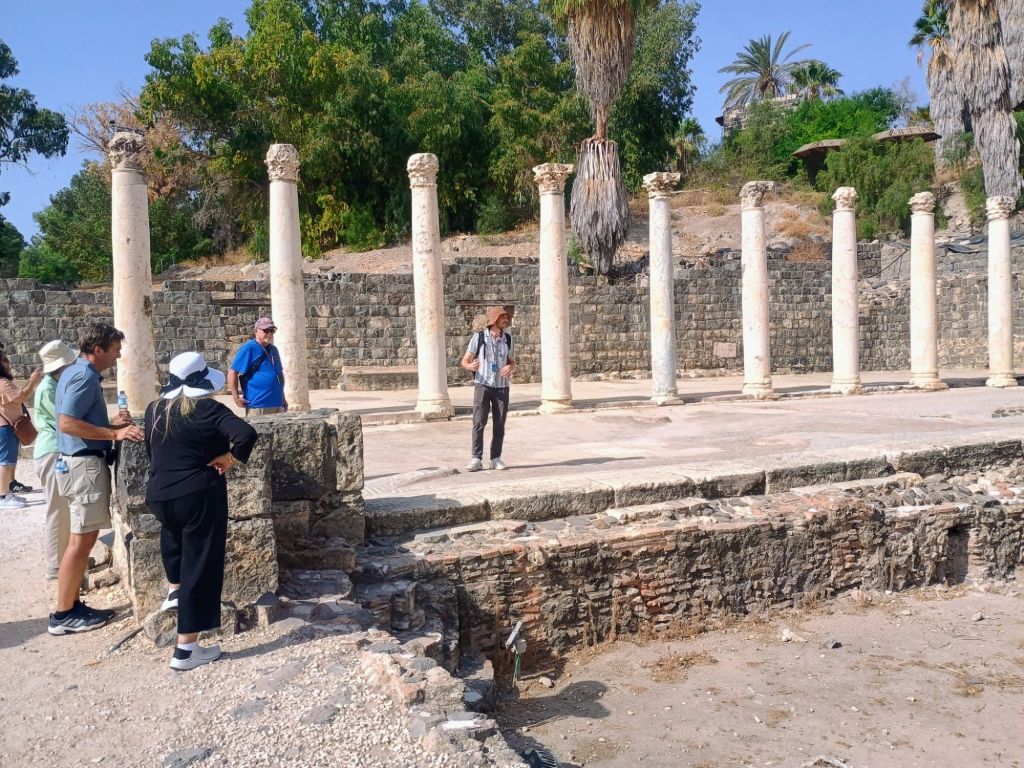
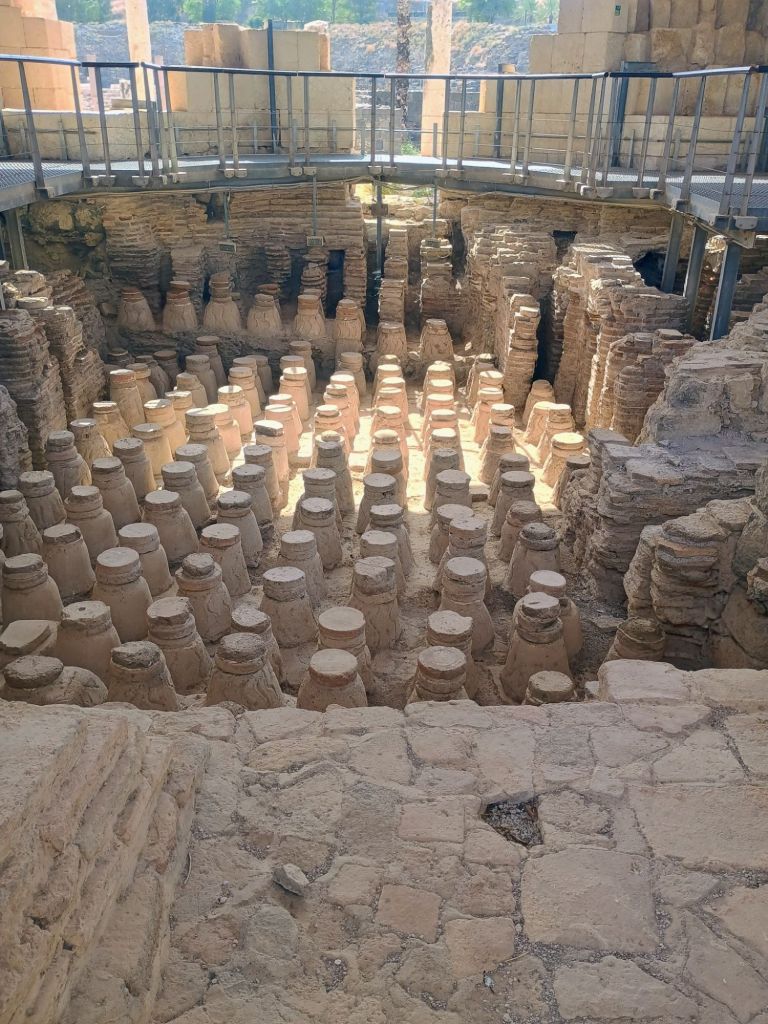
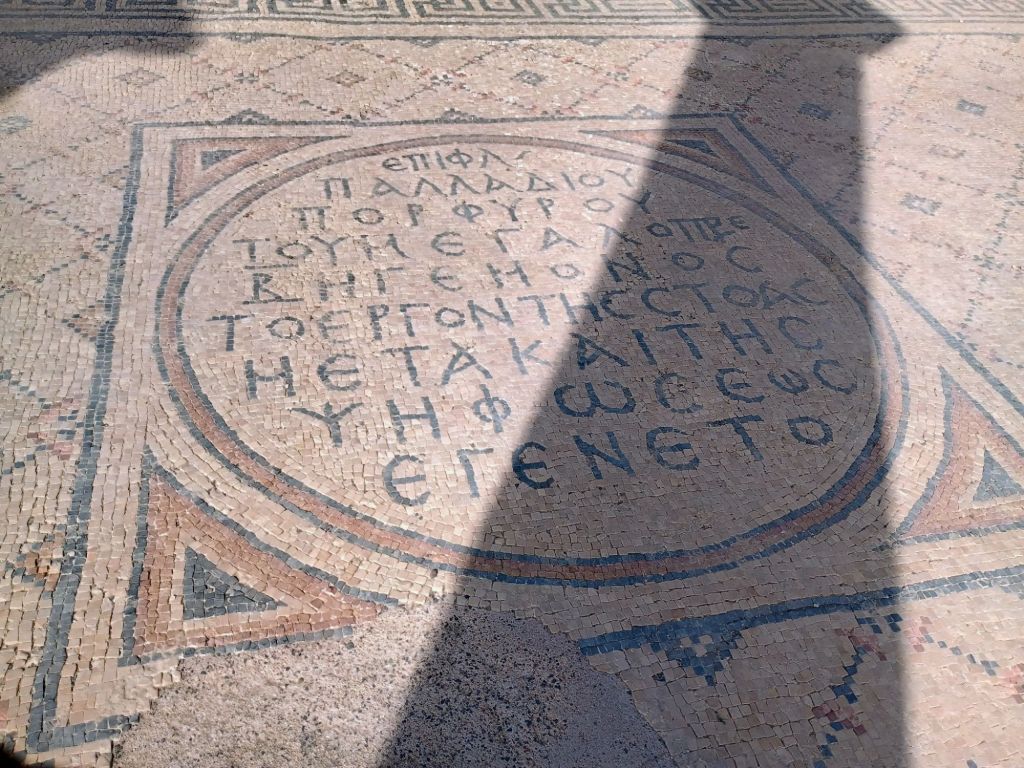
(Thus, Greco-Roman)
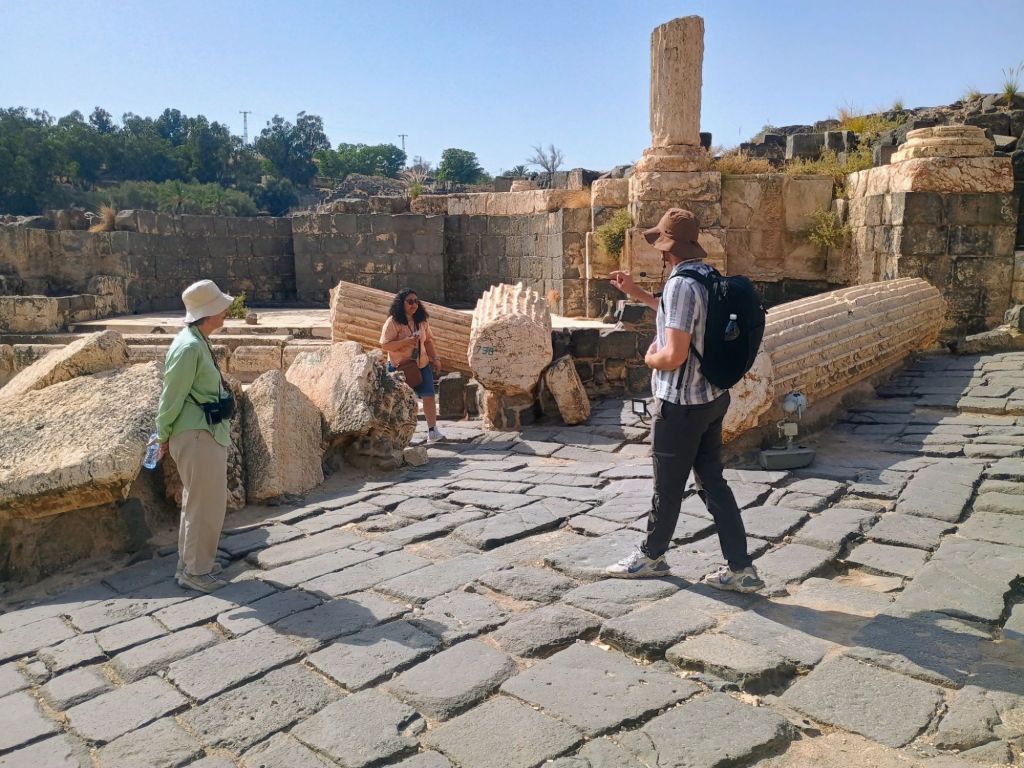
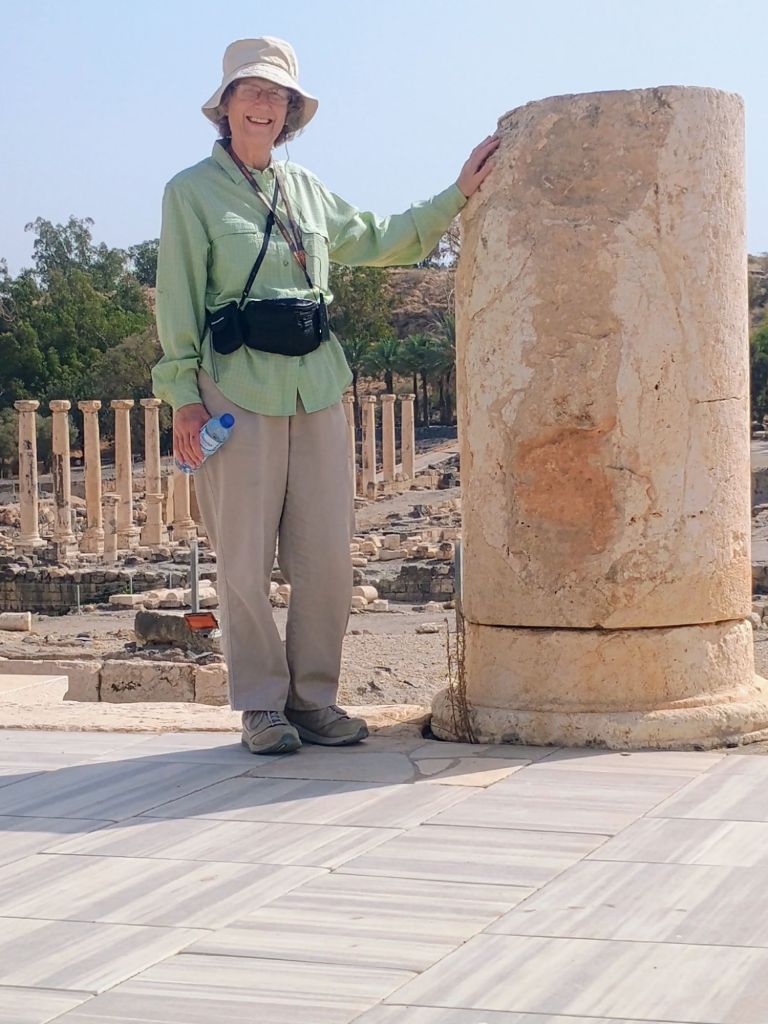
Leaving Bet She’an we headed toward the Jordan River Valley, where we made a right turn on the highway that parallels much of the Jordanian border. Soon, lush farmland gave way to large stands of various palm trees, and then barren desert. After a lengthy drive, the Dead Sea came into view and we soon pulled into Qumran, the place known for the Dead Sea Scrolls.
A group of zealous Jews, known as Essenes, lived in this desert land and took seriously the Lord’s commands and His Word. When word came that the Romans were advancing in 69-70AD, the Essenes wisely hid sacred Old Testament scrolls and other documents in clay jars and took them to the caves of Qumran for safekeeping. Little did they know the Romans would completely conquer, but their scrolls would be preserved for almost 1900 years! On November 29, 1947 the scrolls were found when a Jordanian shepherd boy lost a sheep in one of those caves. Wise enough to know wild animals my be occupying the cave, he threw a rock into the cave, hoping to scare the sheep out. Instead, when he heard it hit something unusual, he eventually wondered in to discover jars containing the Biblical scrolls!
Interestingly enough, November 29, 1947, was the day the UN officially acknowledged the Partition Plan, and Israel’s legitimacy! Had they not, Israel may not be in possession of the scrolls found in many of the caves of Qumran. After all, it is the Jews to whom God has entrusted the Word of God! (Romans 3:2) Some call it coincidence. I call it just another miracle of God!
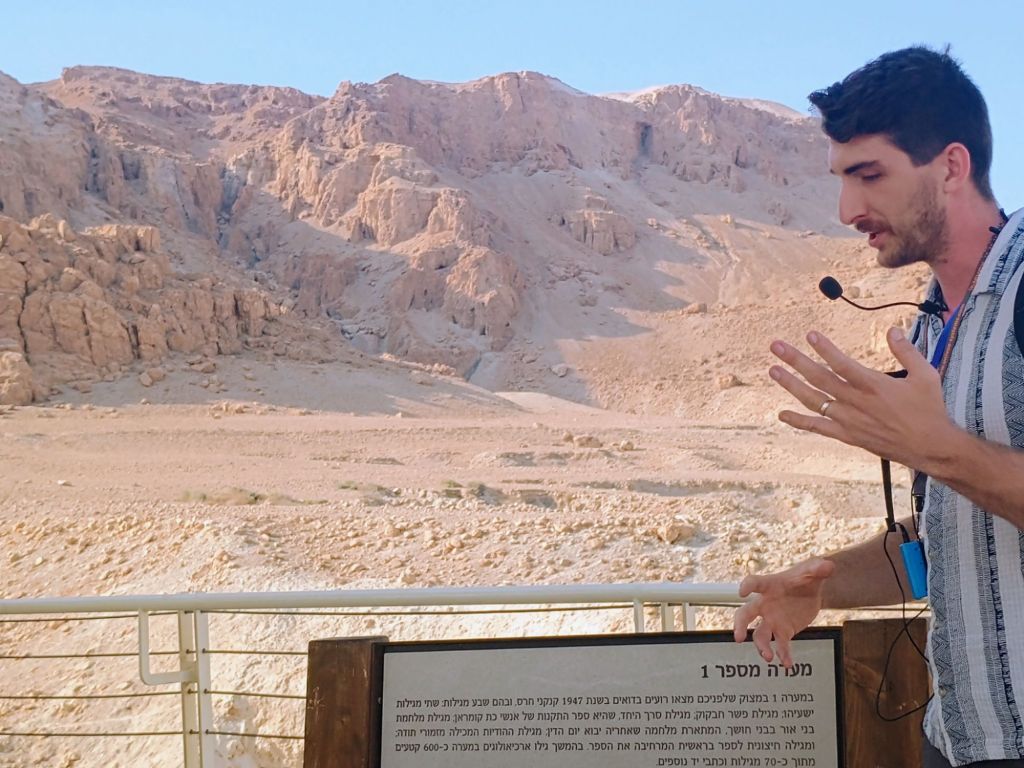
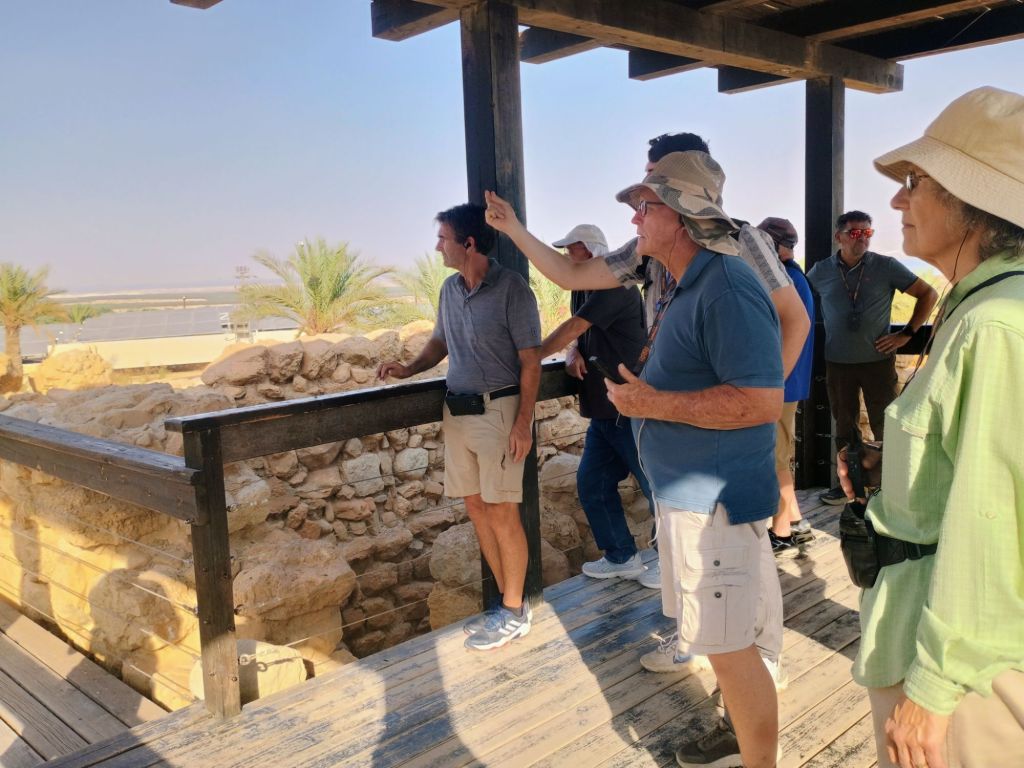
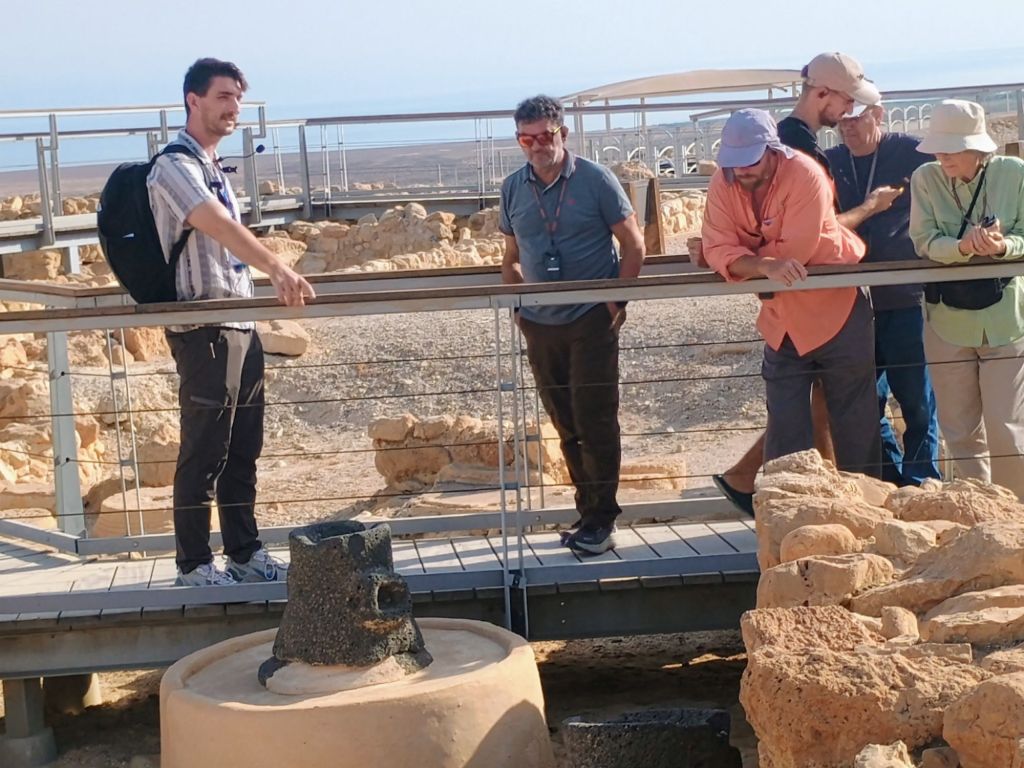
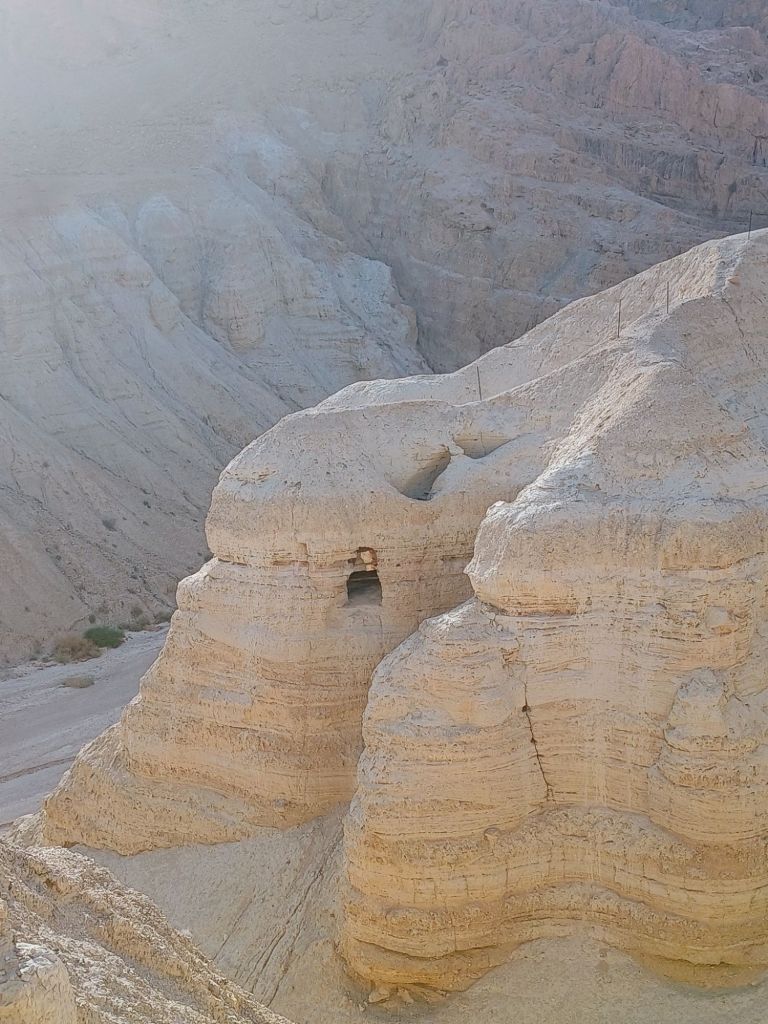
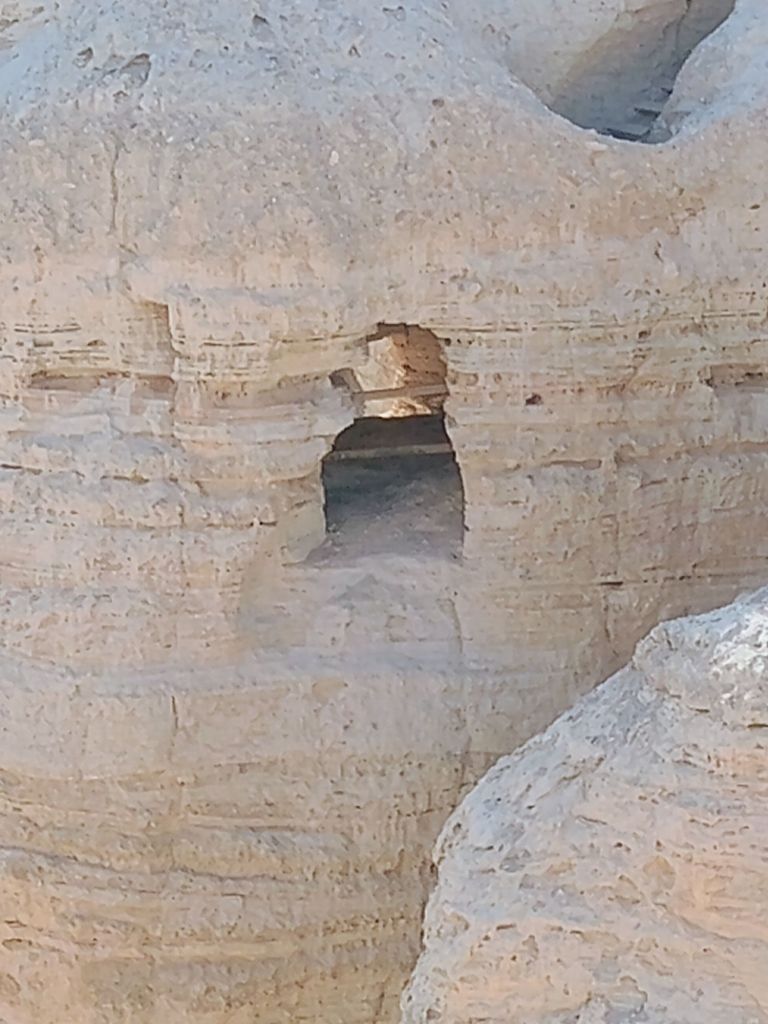
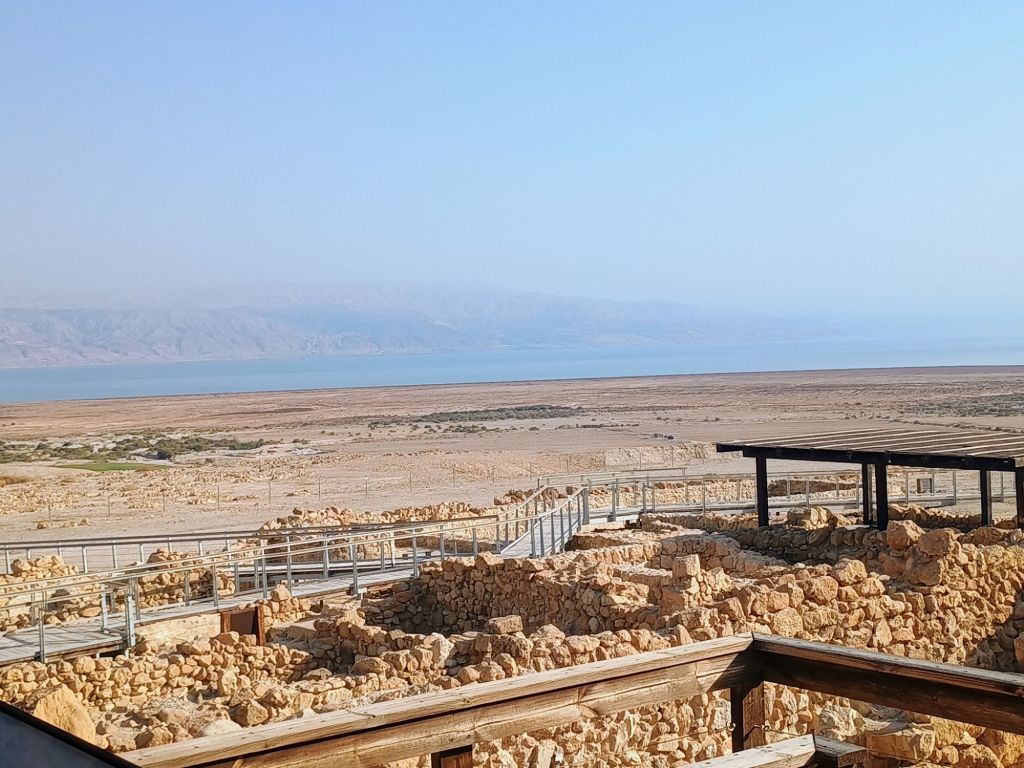
Faced with a 3-hour drive to Eilat at the southern tip of Israel, we filled time learning about Ein Gedi, where David hid from King Saul, and Masada, the site of the Jews last stand against the Roman conquest of 70AD. Along the way, Yotam told us a lot about the Dead Sea as it sprawled across the landscape to our left. We saw the evidence of it’s receding coastline, and the huge factories that pump out all the wonderful Dead Sea products known for medicinal purposes and skin care. (If you are not aware, the Dead Sea is the lowest place on earth. Also, water flows in from the Jordan River, but the Dead Sea has no outlet. Thus, the water is so full of salt and minerals that it is literally impossible to sink! Likewise, those minerals are know to heal ailments regular medicine does not. Many people make the journey here to be treated for various conditions.)
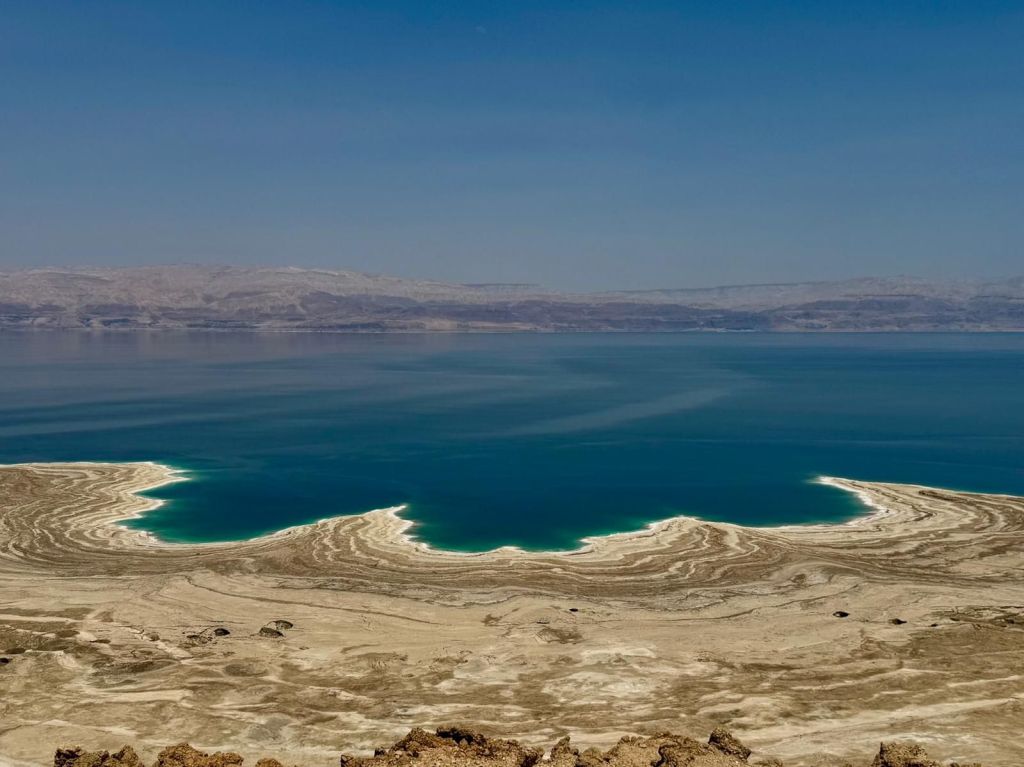
(Photo credit: Peter Szabo, tour guest)
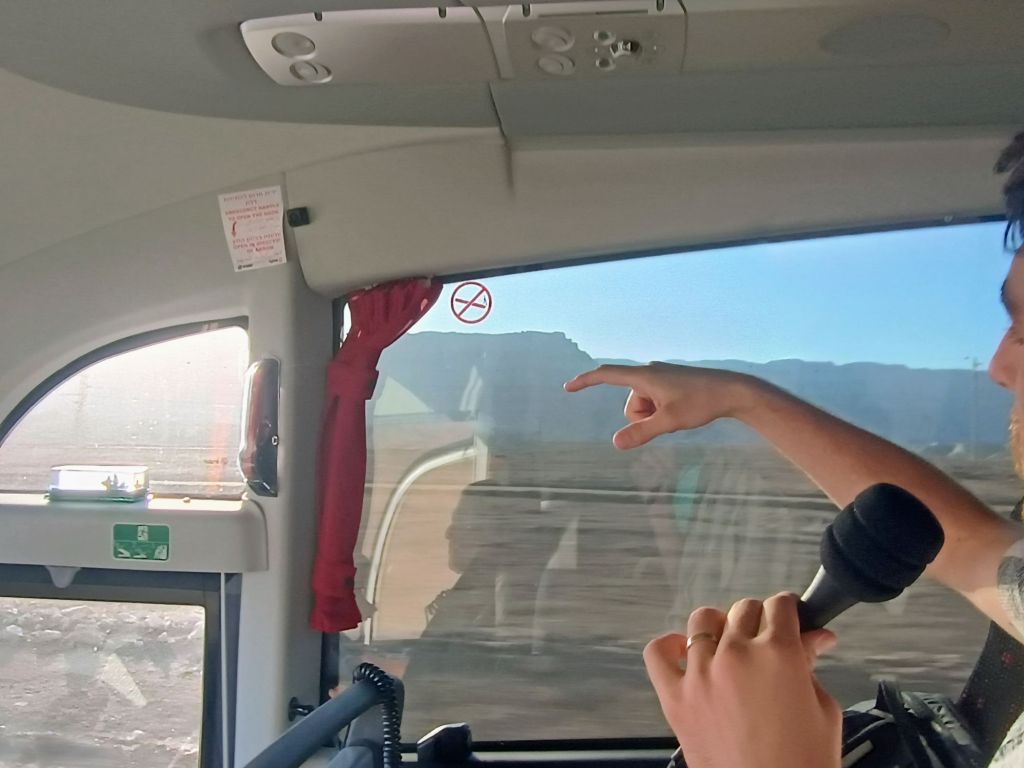
(Actually just above Yotam’s finger.)
Finally, we reached the beautiful city of Eilat, the shining jewel on the Red Sea. I have never been here before, but it fits the description I’ve heard: very different from the rest of Israel, and a bit like Las Vegas. It is loud (even as I write this at 11:45pm!), the entry into Eilat is very colorful, the beachfront hotels are aglow in lights, and “what happens in Eilat stays in Eilat!” In a sense, it is easy to understand why Eilat is different than the rest of Israel because they are totally isolated down here! In the bottom 1/3 of Israel are very few towns or villages. It is somewhat like the wild west, as anything seems to go! It was after dark by the time our bus pulled in, but we are very excited to get a glimpse of Eilat.
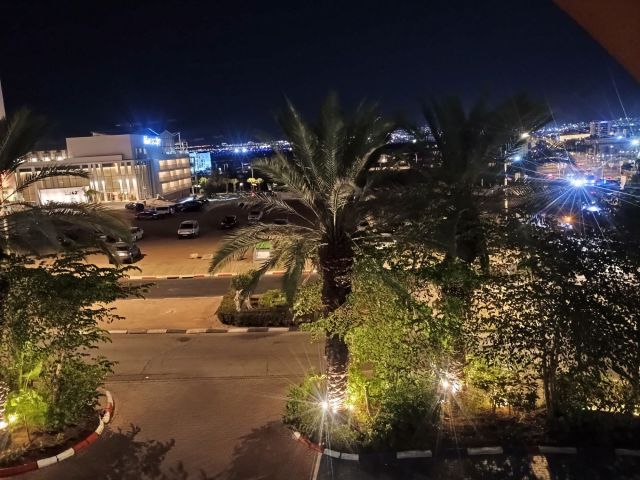
But that glimpse will have to wait. Our long-awaited trip to Petra, Jordan is tomorrow! It is a long way to get here, but well worth it for a second timers’ tour! More on our adventures tomorrow! See you then!

