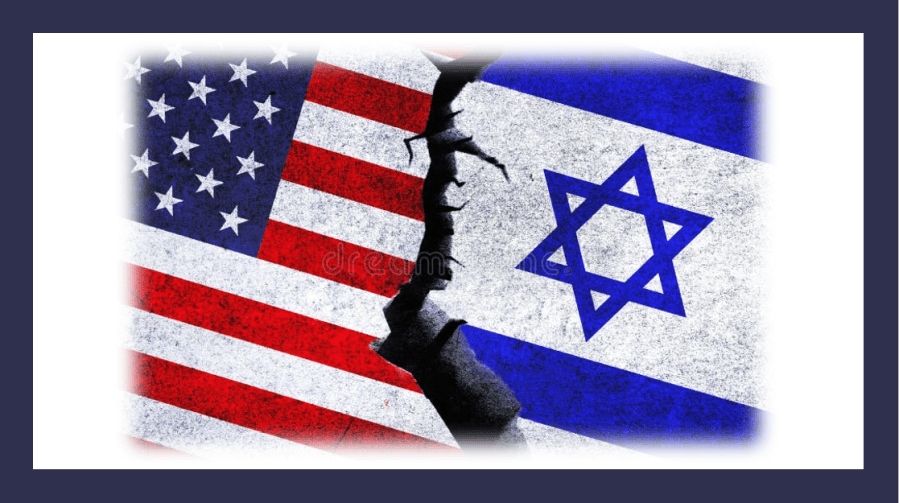
Welcome back friends! If you endured our three-day mini-series entitled It Needs to be Said, you deserve a participation award! For good measure, I’ll throw one more log into the firestorm that was started on Monday! Use the back button at the bottom of this post if you missed the fireworks and want to get in on the action! As predicted, we caught lots of flack by those who disagree…and that is okay! Surprisingly, though, I heard a chorus of Amens, and many said “I’m with you on that!”
Now, before I throw the last log on the fire (at least for now), let me explain to the MAGA maniacs that I agree with you: President Trump has been the most pro-Israel American President in history. He moved the US Embassy to Jerusalem where it belongs, he recognized Israel’s sovereignty over the Golan Heights, he supported Israel’s desire to continue building settlements in parts of the West Bank (where Jews and Arabs often live peacefully in the same villages and neighborhoods), and (until recently) he gave Israel more leeway than any other President to take care of their enemies any way they needed to.
President Trump is also the architect of the Abraham Accords, a series of peace and cooperation agreements between Israel and several Middle Eastern countries such as UAE, Bahrain, and Morrocco. (There is even relative certainty that he is trying to expand it in the midst of this conflict.) There is much to be thankful for when it comes to President Trump and his relationship to Israel.
However, it is difficult to argue that President Trump is not willingly or unwillingly tying Israel’s hands behind her back in the long, drawn-out, difficult-to-understand negotiations with Iran. By drawing red lines then erasing them, Iran sniffs weakness. By promising the American people since April that a deal with Iran is imminent only scars an already compromised reputation. President Trump is losing credibility, and his pursuit of a deal has trumped (pun intended!) his “peace through strength” mantra.
We have all heard the promises, but do you have any idea how rampant the propaganda is? I have not individually verified every citation here, but I recall many of them very specifically and believe this narrative to be fairly accurate. Take a look:
A careful review of President Trump’s public statements over the past several months reveals an unprecedented pattern: on no fewer than 37 different occasions, he claimed that a deal with Iran was essentially complete and ready to be signed—what now appears to have been a messaging campaign largely disconnected from developments on the ground.

Trump’s virtual diplomatic campaign began as early as March 23, less than a month after the war began. Speaking to reporters outside Air Force One, he claimed that major points of agreement had already been reached:

“There are major points of agreement—I would say almost all the points of agreement.”

The following day, the president began repeating a familiar theme: that Iran was desperate for a deal. On March 25, he said Iran wanted “to make a deal so badly,” and a day later, during a Cabinet meeting, he escalated the rhetoric, claiming that Iran was “begging to make a deal.” When asked aboard Air Force One on March 29 whether he expected an agreement within the coming week, he replied confidently:

“I do see a deal with Iran, yes.”

As time passed, Trump’s predictions became even more emphatic. On April 6, he said the parties had been “very close to a deal” before a minor delay. The next day, April 7, he announced on social media that negotiations were in a highly advanced stage:

“We’re at a very advanced stage, but we need two weeks for the agreement to be completed and implemented. It’s a great honor to see this long-standing problem so close to being solved.”

When those two weeks passed without an agreement, Trump continued making optimistic declarations. On April 15, he told CNN:

“I think it’s close to being finished. I see it as very close to being finished. We’ll see what happens. I think they desperately want to make a deal.”

On April 17, during three separate public appearances, he claimed that Iran had “agreed to everything” and that the deal would be signed “within a day or two.” On April 20, he posted on Truth Social:

“Everything will happen relatively quickly!”

On April 30, he again insisted that Iran was “dying to make a deal.”

On May 18, when announcing a postponement of military strikes at the request of regional countries, Trump partially acknowledged that his earlier predictions had failed, but immediately qualified the admission:

“There were times when we thought we were very close to a deal and it didn’t work out, but this time it’s a little different.”

It wasn’t.

On May 23, he again claimed that the agreement was “mostly negotiated and drafted, pending final approval.” More recently, in an interview with Axios, Trump blamed both Israel and Iran for undermining his efforts because of what he called a “side fight,” declaring:

“We’re very close to a final deal with Iran. It’s going to be a good deal. I don’t want it to blow up because of what’s happening now.”

The latest installment came last night during a conference call held on behalf of Senator Lindsey Graham, where Trump repeated the promise for the 37th time:

“We’re negotiating right now. They want to make a very good deal. They’re willing to give us everything.”

According to this analysis, Trump’s determination to sell the public on an agreement that has yet to materialize appears to stem from two primary motivations.

First, he is attempting to prevent a sharp spike in global oil prices and major turbulence in financial markets, especially in light of Iran’s official threats to target regional energy infrastructure belonging to the United States and its allies.

Second, Trump appears to believe that by repeatedly declaring in public that Iran is “desperate” and “ready to give us everything,” he can pressure the parties back to the negotiating table and, in effect, create a diplomatic reality through persistent messaging.

(C14) - reposted on Amir Tsarfati's Telegram channel (6/9/2026)
Without a doubt, the US and Israel have hammered Iran militarily and have left them devastated in many ways. Yet, they keep firing rockets and finding ways to antagonize a President who desperately wants a deal, and might even forfeit the US alliance with Israel to get it. If Iran can drive that wedge, they come out huge winners. If America signs a deal that leaves Israel vulnerable to the usual threats from Iran and their proxies, don’t expect Israel to sit silently while being attacked. With or without America, Israel will defend their homeland.
The key questions are:
- What message does that send to Israel?
- Is this the point at which America turns her back on Israel?
Now, here is where I will leave one small caveat. It is quite possible (probable, perhaps) that Trump is not negotiating with Iran as much as he is negotiating with other moderate Arab countries to sign on to the Abraham Accords. Personally, I believe that is a likely scenario, and that he is having problems getting Saudi Arabia to jump on board. However, even if that is the case, the problem with Iran must still be dealt with. Regardless, it all funnels down to the same fact: Iran will be a major player in the Ezekiel 38-39 invasion of Israel. There aren’t many scenarios in which Iran’s evil regime would be totally wiped out because they will definitely join the axis of evil that comes against Israel.
Believing friends, aren’t you glad Jesus is King of Kings and Lord of Lords! None of this surprises Him. Through human eyes, it may appear our world is falling apart, but through His eyes, things are falling into place!
28 Now when these things begin to happen, look up and lift up your heads, because your redemption draws near.”
~Luke 21:28
UPDATE: Since this post was written, President Trump has authorized strikes on Iran. However, he indicates the US will strike day-after-day until Iran agrees to a deal. Watch for Iran to do what they routinely do: wave the white flag, promising to return to the negotiating table, but still no commitment to an actual peace agreement.
UPDATE #2: Iran has reportedly already asked Trump to stop the attacks. We’ll await further news, but it begs the response: “Here we go again!”

