After a wonderful 2-day visit with Aly and Teo, I connected with other Israeli friends, Sheila (who coordinates our Israel tours) and her husband, Kevin. Another wonderful couple gracious enough to invite me into their home.
Besides her responsibilities at One for Israel and Israel College of the Bible, Sheila also happens to be an archeologist! So, I took her up on an offer to see some sites I have not seen before, and was blessed to get archeological perspectives I would not have known!

We began our Friday adventure at Khirbet Qeiyafa, overlooking the Valley of Elah where David took on the giant, Goliath. Having seen the valley from Tel Azekah, I was now getting a different viewpoint a bit further down into the valley, yet not on the valley floor. From our vantage point, we could look down the valley and see the distinct hills from which Goliath antagonized the Israelites as they camped on the opposite side of the valley. It is beautiful scenery and one can picture how the confrontation played out.
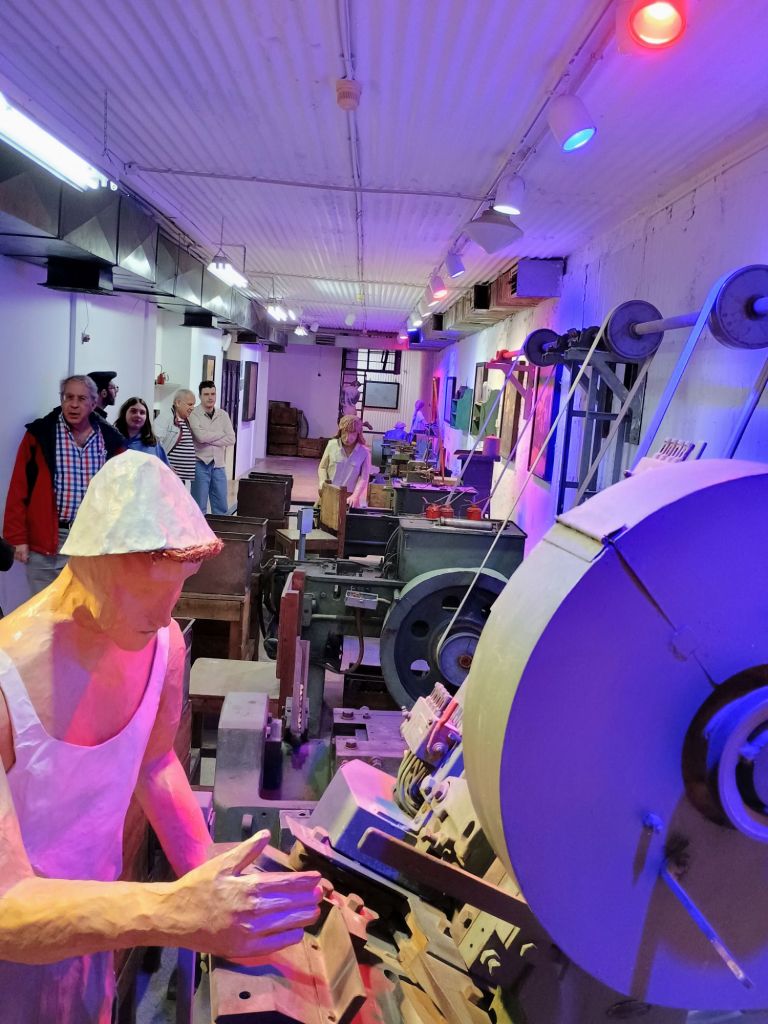
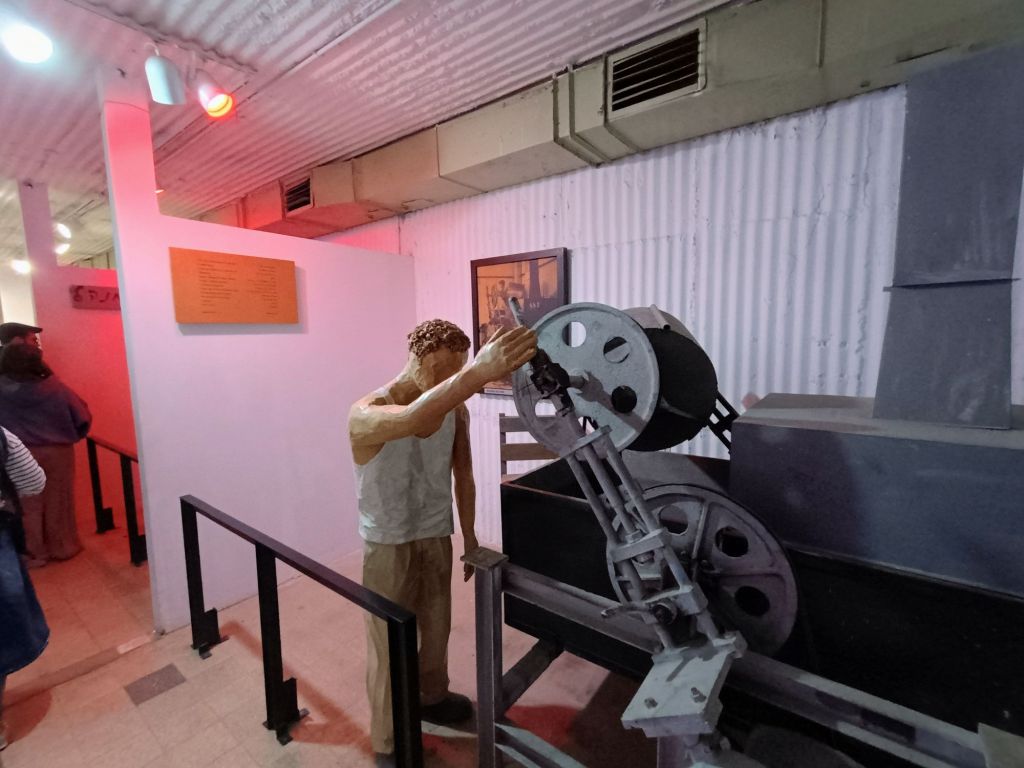
Our next stop, the Ayalon Institute, was especially intriguing! Founded in 1920, the Haganah was a Zionist paramilitary organization that pre-dated Israel’s rebirth as a nation (1948). Still under the British Mandate, the Haganah existed primarily to defend against attacks from the Arabs. Because they were under the British Mandate, the Haganah was not recognized as an official military and, thus, operated underground.
There was one huge problem for the Haganah: Where would they get ammunition for their weapons without the British finding out? Underground! So, in 3 weeks’ time, under the guise of building something else, they dug an underground factory without being discovered by the British. Machinery from Poland had been ordered years earlier by a forward-thinking Israeli who knew they would have to fend off enemies.
In 1945 the factory was established beneath a laundry room in the middle of Kibbutz Hill. Because the noise made by the laundry equipment drowned out the noise of the factory, the kibbutz upon which the factory was built began taking in laundry from neighboring kibbutzim, as well as British soldiers, to ensure the laundry equipment ran continually during the 10-hour days in which ammunition was produced.
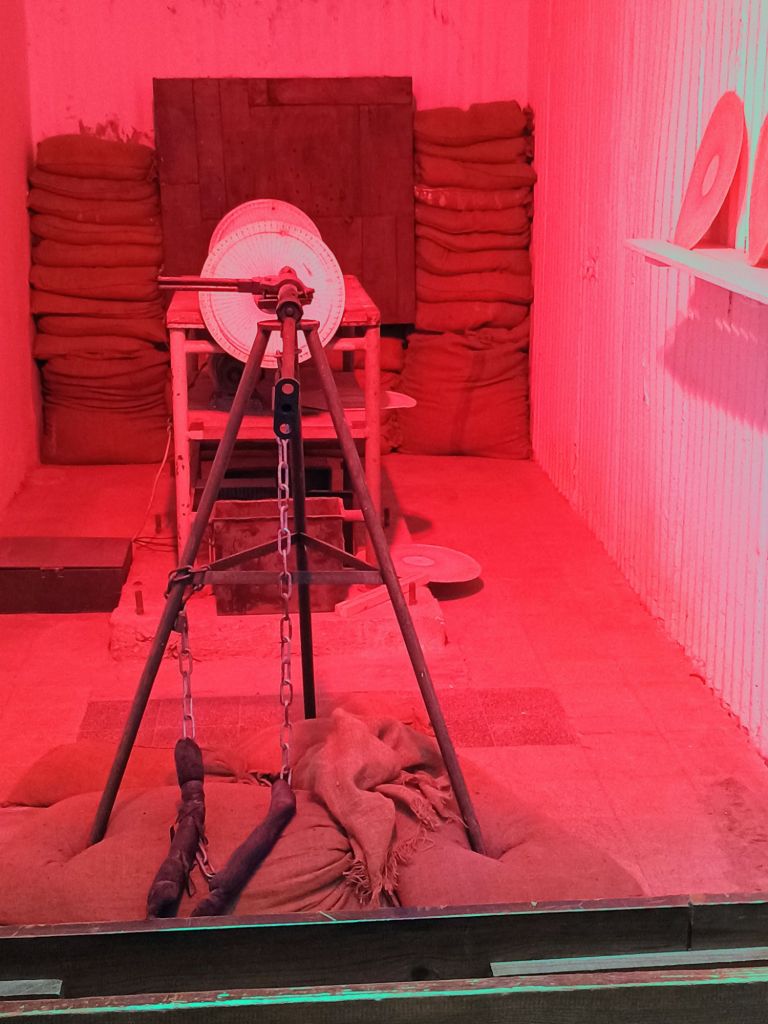
Yet, only the 45 people working in the factory and a handful of those helping to keep them hidden (such as the operator of the laundry room) knew about the factory! Many Ingenius innovations were included to filter air, tan their skin (since working everyday in the underground left one very pale), and a signal system to let them know when “giraffes” (British soldiers and others) were close by. It was also extremely dangerous, so there was no room for error, particularly in the underground gun range for testing, and the area designated to load ammunition with precise amounts of gun powder. An explosion of the factory would take out not only the 45 workers, but also the school where children played just above the factory!
In three years of operation, 2.25 million bullets were produced, which played a huge part in Israel’ victory in their War of Independence. Once Israel was reborn as a nation, the need to remain underground dissipated and the factory was moved to nearby Tel Aviv.



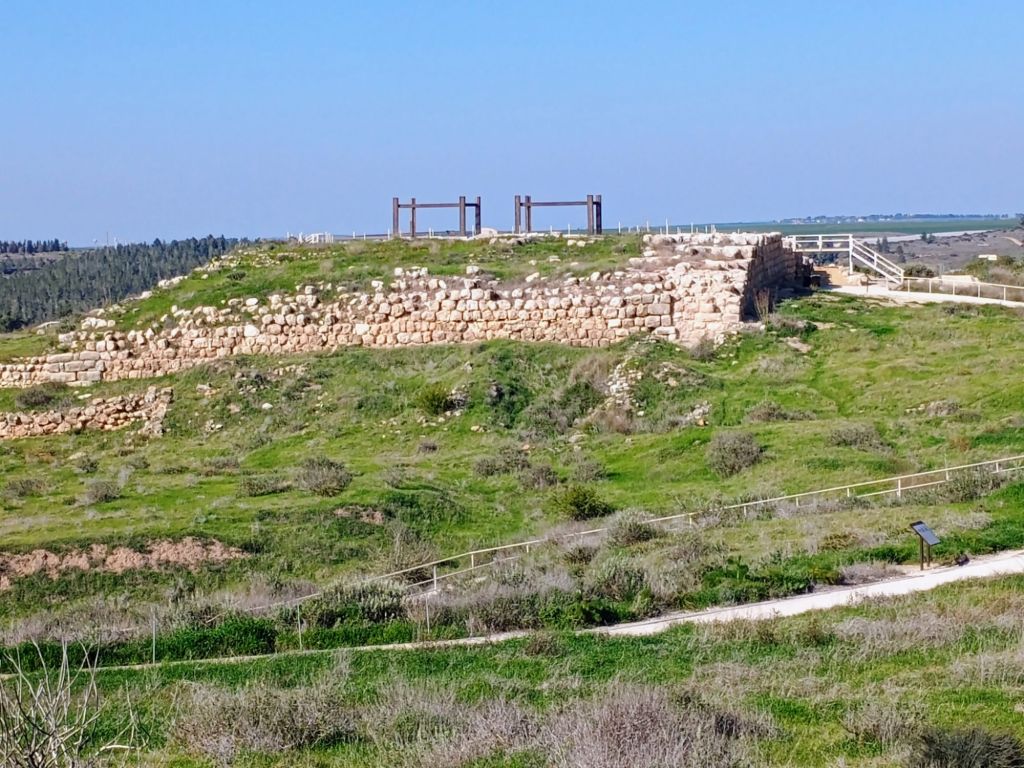
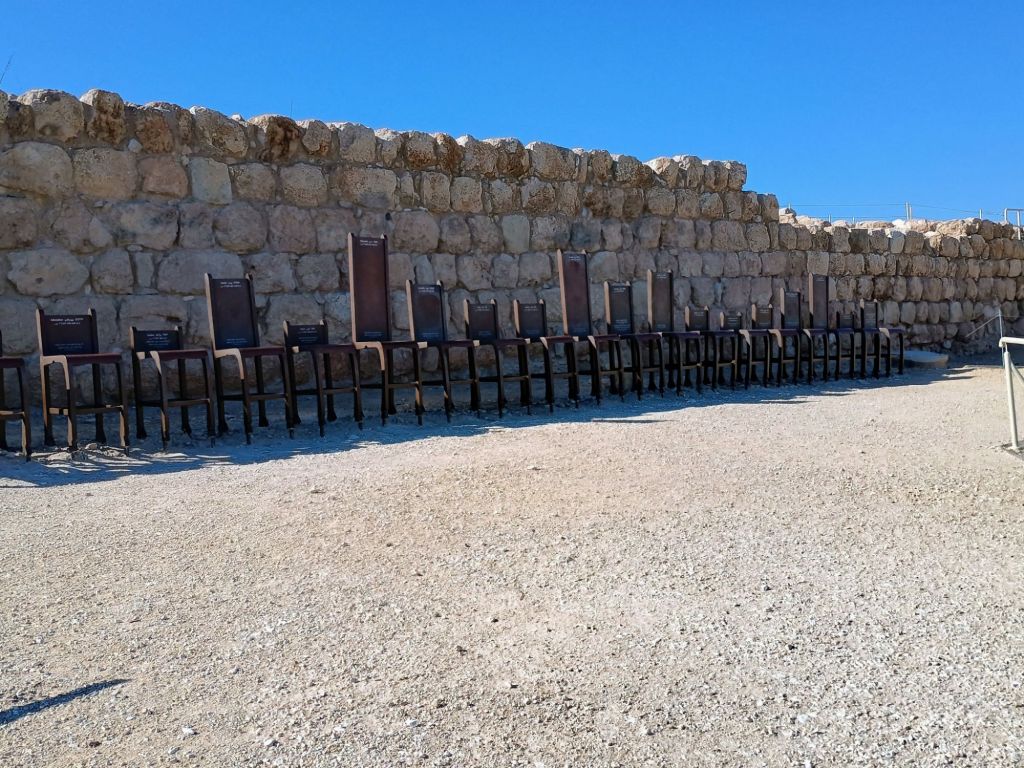
Another interesting site visited on Friday was Tel Lachish, the ancient Canaanite and Israelite city in the Judean lowlands. King Sennacherib of Assyria desired to rule all of Judah, so set out to destroy a string of Judean cities, some of which are located in or near places we have been on our tour: Ashkelon, Ashdod, Jaffa, for example. Lachish was another in that string of conquests.
Once Lachish was conquered, Sennacherib’s army advanced on Jerusalem where King Hezekiah ruled. Rather than allow Jerusalem to be overtaken, Hezekiah paid a tribute to Sennacherib, making Jerusalem a vasal state to the king. (Read more in 2 Kings 18-19.)
What may appear to be “just some antiquated story from the Old Testament” totally comes alive when you see the sites and recount the narrative on the very site it happens! (Good reason to plan a trip to Israel! You never read your Bible the same!)

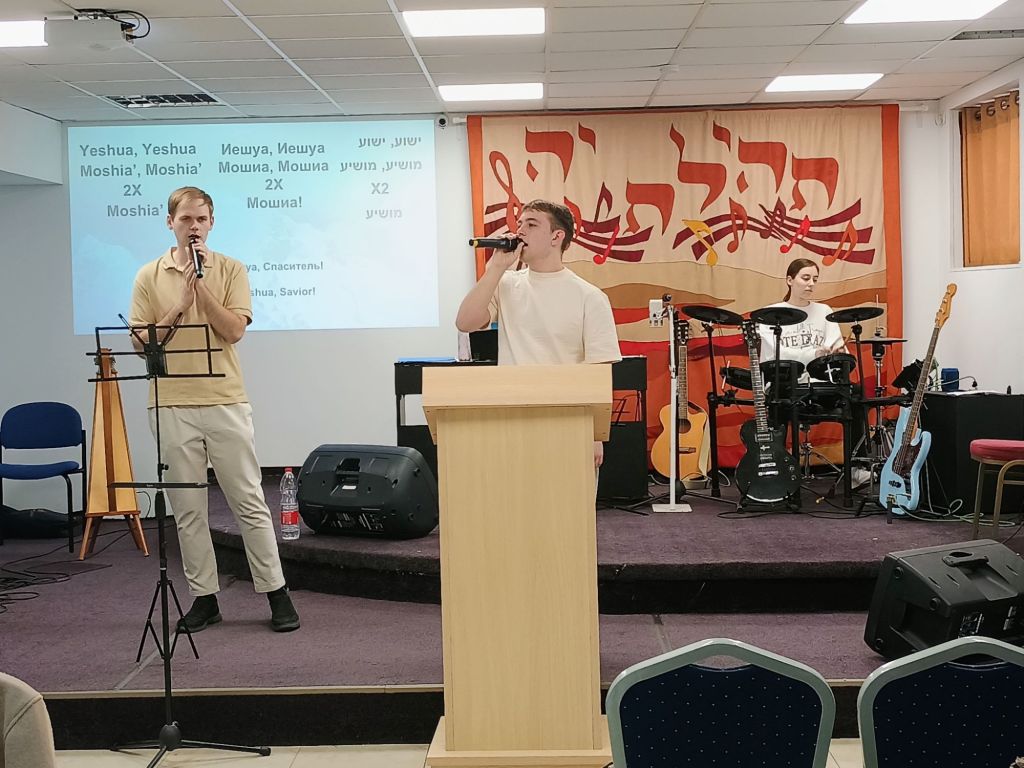
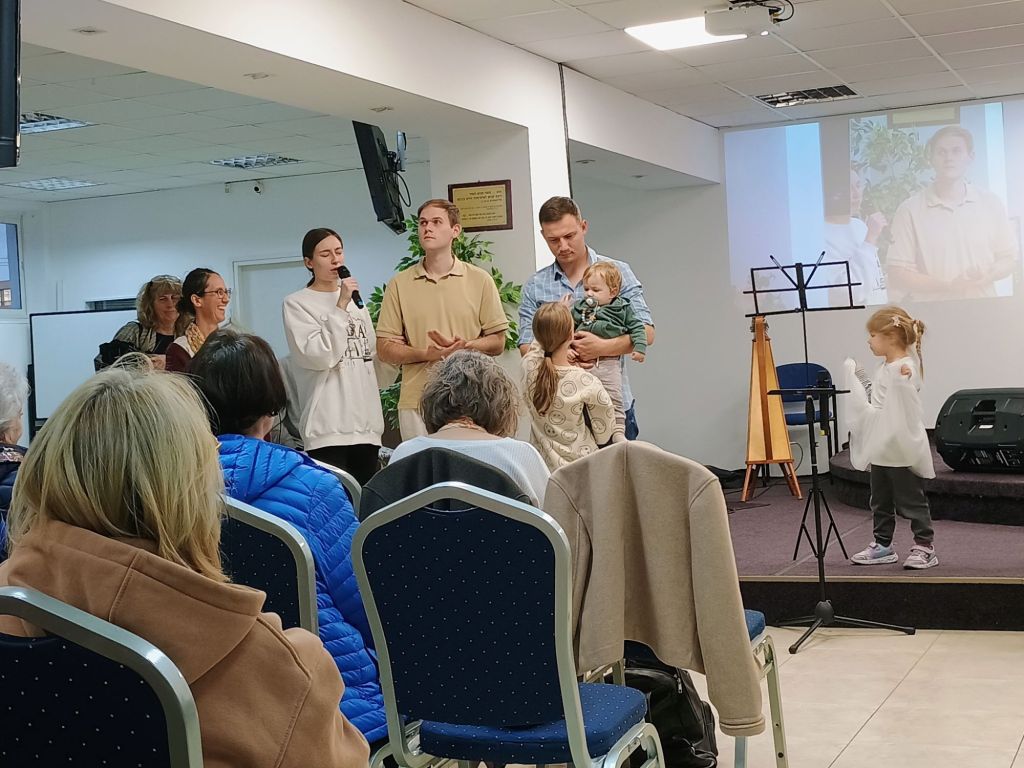
Friday evening, as you know, begins Shabbat, thus everything shuts down by mid-afternoon. However, the blessings didn’t end there, as I attended the Messianic congregation with Kevin and Sheila. What a blessing to worship with believers from around the world. Pastor Mickey told me 25 nations are represented in their congregation! Again, a piece of heaven on earth!
Still another day in Israel and some special things coming up. See you back here tomorrow!
 Looking for the Blessed Hope
Sheila and Kevin are a blessing!I may already have commented that Sheila was my guide on a One for Israel tour, feb or march 2020, just before the Covid shut down.Consequently, Petra was not its usual “packed” as visitors from Asia could not be there.Wow, on the valley where David and Goliath met. Kym, Aly took us to an overlook here on our Tour. The Ayalon Institute–all this information is completely new to me! Fascinating! I have experienced Lachish. You, and your other 3 when they were still with you, were so blessed with the beautiful weather.And you, the availabilty of Aly and Teo, Shelia and Kevin. Rich, rich, rich. Your report on a more recent day of the grief in Israel became palpable for me. Thank you, Kym, for taking the time to enable your readers to experience your trip. And now, what does the Lord have next for Kym? shirley mitchellmontreat nc
Thank you Shirley. Yes, on our tour in 2023 we went to Tel Azekah to overlook the Valley of Elah. (The best way to see it.) Sheila gave me a different angle to view from, though, and it was interesting to see it from a different perspective. Lachish is newly excavated and rebuilt (during covid and the war). It certainly brought the narrative of Sennacharib’s invasion into clear perspective.
Other tours are currently being planned. I love doing mission trips, but those may have to be self-formed groups, as it is not easy to combine tour with a work trip. We’ll see how the Lord leads!
Blessings to you!