
Welcome back, friends! We’re deep into our journey now and today and tomorrow will be more intense study days as we dig into God’s Word to mine the nuggets of gold found in the feasts of Israel. There are seven major feasts, so we’ll split them into those whose prophetic implications are already revealed, and those still awaiting their fulfillment. The feasts serve as a nifty outline of God’s time table which was illustrated in yesterday’s diagram. Each feast has its fulfillment in the Messiah, and we will clearly see in today’s portion how God has already been at work preparing Israel for their national salvation. Ready to mine the treasures held in the feasts of Israel? Let’s go!
First, let’s load up on some guiding principles. Look up the following and hold these truths in your mind as we study the feasts:
- Romans 1:16 – God has an order to things.
- Isaiah 46:8-10 – God knows His plan, and…
- Deuteronomy 29:29 – …He reveals His plan as He sees fit!
- Colossians 2:16-17 – Through the Jewish lens, the feasts cast a shadow, but Christ is the substance.
Though we glean great principles from them, the feasts were meant for the Jews. God definitely has an order to things, and His word says He reveals to us what He wants us to know. He reveals details of His plan for the Jews via the feasts. Jews, however, see differently without benefit of knowing the One who fulfills the feasts. They look at a shadow, we see the substance!
Beware! We’re only scratching the surface of the feasts, but it will provide us confirmation that God is most definitely at work in Israel! Seat belts on…here we go!
The seven feasts are described in Leviticus 23. Please read that chapter.
Study tips: Can you identify the seven feasts? (Hint: The Sabbath is not one of the seven. It is the weekly day of rest. Hebrew days begin and end at sundown, so the Jewish Sabbath is Friday sundown to Saturday sundown. You will see the Sabbath clearly observed when virtually everything in Israel shuts down on Friday evenings!)
Feast #1: Passover (Pesach in Hebrew)
Study tips:
- Please read Exodus 12:1-13 (focus on verses 5-7), John 1:29 and 1 Corinthians 5:7b.
- Are you able to identify the shadow (in the Old Testament) and the substance (in the New Testament)
Through Jewish eyes, they see the blood of the lamb sprinkled on doorposts as that which saved them from the death angel who passed over. That is the shadow. Jesus is the Lamb of God who takes away the sin of the world! That is the substance. Do you see how this works?
Feast #2: Unleavened Bread
Concurrent with the last 7 days of the 8-day Passover Feast, no leaven was to be eaten. This is the Feast of Unleavened Bread.
Study tips:
- Read Leviticus 23:6 and 1 Corinthians 5:7-8.
The shadow is the elimination of sin by cleansing the house of leaven. The substance is best illustrated by this visual:
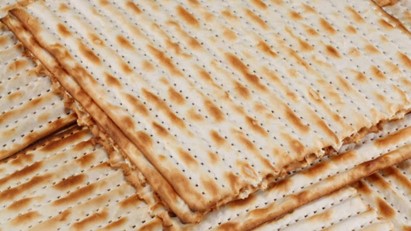
That is matzo (unleavened bread). With that picture in mind, read Isaiah 53:5 in NKJV and NASB. Jesus was pierced, bruised and broken for our transgressions. Do you see it in the matzo? That is the substance!
Feast #3: Feast of First Fruits
Also embedded in Passover and the Feast of Unleavened Bread, First Fruits commences during day 3 of Passover.
Study tips:
- Read Leviticus 23:10-14 and Matthew 28:1, 6 and 1 Corinthians 15:20.
- Each references the day after the Sabbath. Sabbath is Saturday, so on what day does the Feast of First Fruits occur?
- What is the shadow? What is the substance?
In this first set of spring feasts, we see God’s plan in the death, burial and resurrection of Jesus! These are Jewish feasts, not Christian feasts. Salvation was meant FIRST for the Jews, yet their feasts beautifully illustrate Jesus’ death, burial and resurrection. Pure substance!
Feast #4: Pentecost (Shavuot in Hebrew)
A late-spring feast, commencing 50 days (“pente”) after the resurrection of Jesus (First Fruits), Pentecost marks the culmination of redemption. Remember, God called Abraham as the vehicle of world redemption, so it is especially significant that Jewish eyes still see only the shadow, not the substance.
Study tips:
- Read Leviticus 23:15-23, Exodus 32:28, Acts 2:1-4 and Acts 2:41.
- What is the shadow? What is the substance?
- What is significant about Exodus 32:28 and Acts 2:41?
Pentecost is the only feast not clearly and concisely fulfilled by Jesus Himself. However, it was the birth of the church and the indwelling of the Holy Spirit, both of which our Lord Jesus plays a huge part! Remember our diagram? The Church Age began on Pentecost!
All four of these feasts have been fulfilled by Jesus, whether or not Jewish eyes see it. Here is a recap:
Jesus is:
- Our Passover Lamb – the Lamb of God who takes away the sins of the world!
- The essence of unleavened bread – bruised, pierced and striped for our transgressions.
- The fulfillment of first fruits – He was raised to life first, so that we might be raised to life with Him!
- Part of the three-in-one Godhead sent at Pentecost – God the Father gave the Holy Spirit to quicken hearts to know the Son! The church was born on Pentecost, and we were granted the incredible blessing of being grafted into God’s family
The final three feasts are different because they are yet to be fulfilled. Despite God’s work from the beginning of time to reveal Himself to the Jewish people, nationally speaking, eyes are still blinded and hearts are still closed. But God is not done, and the wonderfully prophetic fall feasts are yet to come! We’ll take a look at those tomorrow. See you then!
 Looking for the Blessed Hope