
We focused on Tishah B’Av a couple days ago, but I want to shed a bit more light on the remembrance of that infamous day. Tishah B’Av is the ninth day of the Hebrew month, Av, and is a day of tragedy in Jewish history. (See Tishah B’Av: Remembering the Loss of Zion)

In 135 AD, the Jews made a final last stand against the oppressive Romans who had destroyed the Second Temple on Tishah B’Av, 70 AD. That final stand was called the Bar Kochba Revolt, which the Romans ultimately crushed. During the final days of the revolt, thousands of Jews hid inside an ancient tunnel system under the City of David, near the Pool of Siloam. Once discovered, the Romans removed portions of the stone infrastructure in order to pull Jews out and capture them. This, too, happened on Tishah B’Av, and the picture to the right is of an actual place where Jews were taken from their hiding place.
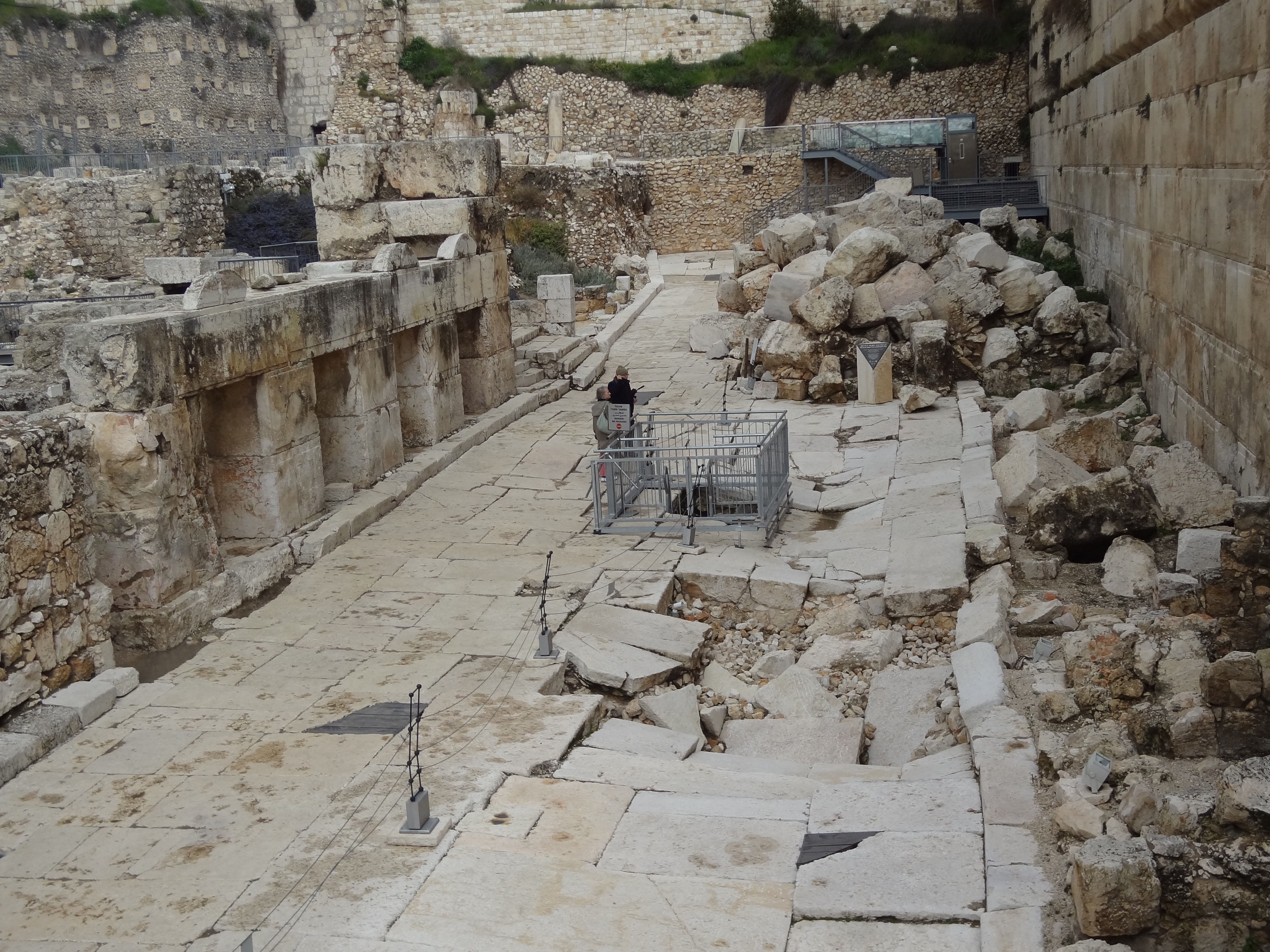
I have seen the tunnels, the Pool of Siloam and the pathway that once led all the way up to Temple Mount via the Southern Steps. I have also seen the rubble left by the Romans who literally shoved every stone of the Temple off of Temple Mount. Some of that rubble remains near the southwest corner of Temple Mount. (See picture to the left.)
To provide some perspective of the area, see the picture to the right. This is a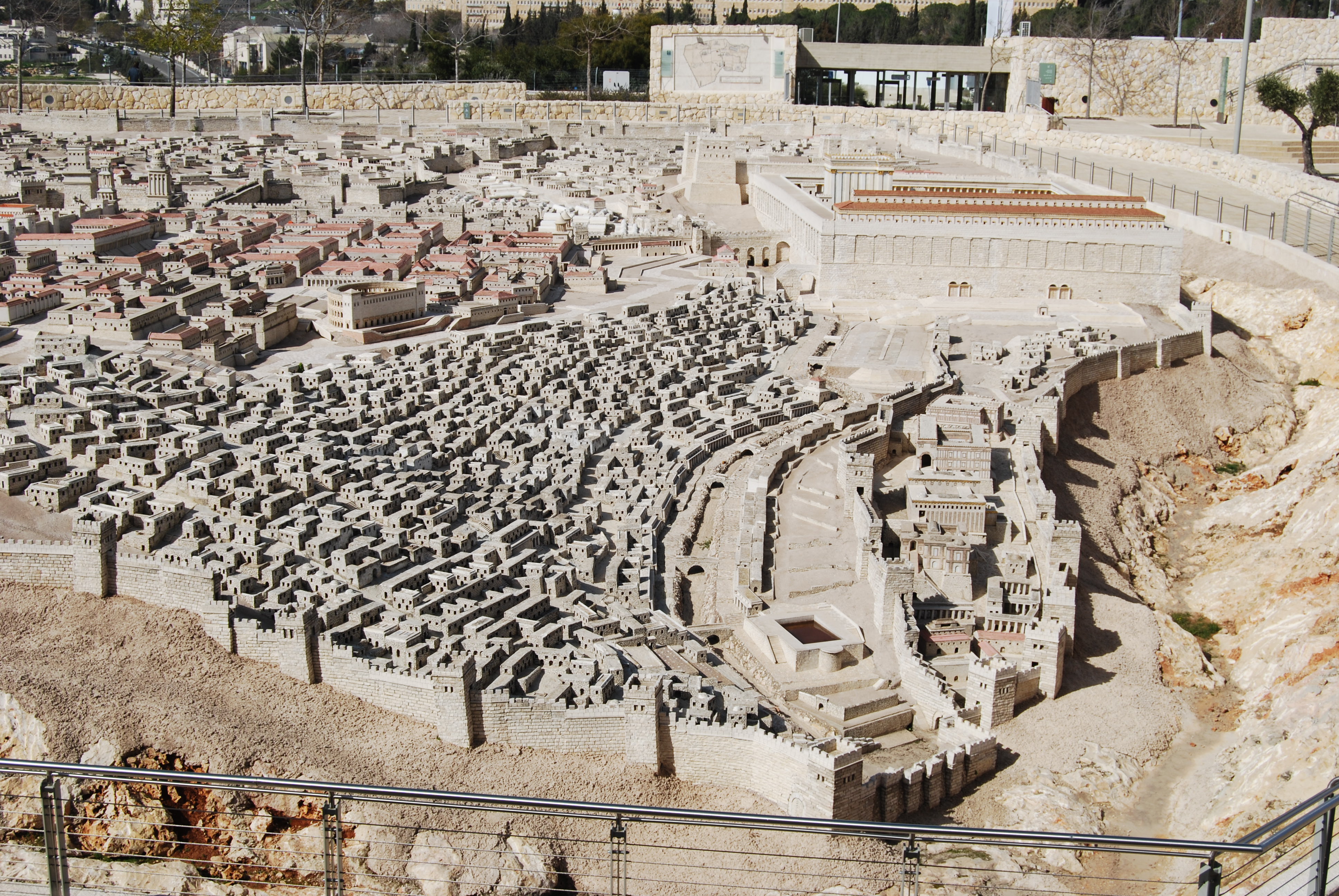 model city of Jerusalem at the time of Jesus. In the lower right corner, you will see the convergence of two valleys. The Pool of Siloam lies in that area, and the City of David stretches from that lower right corner northward to Temple Mount, the prominent structure in the upper right part of the picture.
For more information and a brief 3 1/2 minute “tour,” see Jerusalem’s Destruction: the last hideout.
 Looking for the Blessed Hope